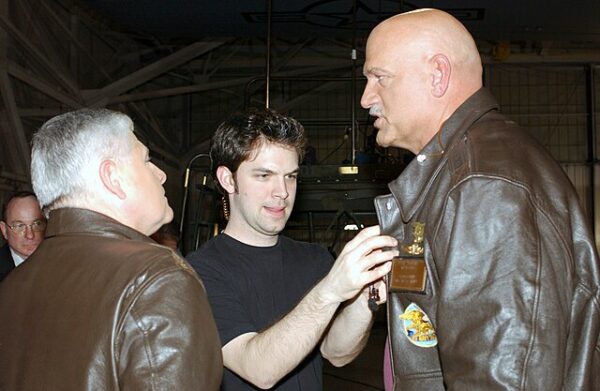
On January 4, 1999, Jesse Ventura was sworn in as the 38th governor of Minnesota, marking one of the most unexpected political ascents in modern American history. A former professional wrestler, Hollywood actor, radio host, and Navy veteran, Ventura entered office not as a Republican or Democrat, but as a member of the Reform Party—an insurgent candidacy that stunned political professionals nationwide and reshaped assumptions about voter behavior at the turn of the millennium.
Ventura’s victory in the November 1998 election had already made headlines. Running a populist, anti-establishment campaign, he defeated Republican Norm Coleman, then the mayor of St. Paul, and Democratic Attorney General Hubert H. “Skip” Humphrey III, the son of the former vice president. Polls and party strategists had largely written Ventura off early in the race, but his blunt speaking style, relentless media presence, and appeal to politically disaffected voters—particularly independents and younger Minnesotans—carried him to a decisive plurality.
The inauguration itself reflected Ventura’s unconventional persona. Held at the Minnesota State Capitol in St. Paul, the ceremony followed traditional constitutional procedures but was infused with the symbolism of a political outsider taking the reins of state government. Ventura took the oath of office administered by Minnesota Supreme Court Chief Justice Kathleen Blatz, pledging to uphold the U.S. Constitution and the laws of the state. Supporters packed the Capitol, many drawn as much by the novelty of the moment as by partisan loyalty.
Ventura’s path to the governor’s office was anything but typical. Born James George Janos, he rose to national fame in the 1970s and 1980s as “Jesse ‘The Body’ Ventura,” a flamboyant heel wrestler in the World Wrestling Federation. After retiring from the ring, he transitioned into acting, most notably appearing in films such as Predator, and later into political commentary via talk radio. His first foray into elected office came in 1991, when he won the mayoralty of Brooklyn Park, Minnesota, running as an independent and serving a single term.
As governor, Ventura entered office promising to shake up what he derided as a complacent political class. He campaigned on tax reform, government accountability, and skepticism toward entrenched party interests. One of his most prominent early initiatives was a push for property tax relief, which later culminated in a reduction of state income taxes made possible by Minnesota’s budget surplus during his term. Ventura also championed campaign finance reform and publicly financed elections, consistent with his critique of special-interest influence.
Yet from the outset, Ventura faced the structural challenges of governing without a party base in the legislature. Both chambers of the Minnesota Legislature were controlled by coalitions of Democrats and Republicans who were often wary of the governor’s unpredictable style and confrontational rhetoric. Negotiations were frequently tense, and Ventura’s blunt public criticisms of lawmakers strained relations further. Still, his administration managed to enact several key policies, demonstrating that an outsider governor could, at least in part, translate populist momentum into governance.

Nationally, Ventura’s inauguration resonated beyond Minnesota. Coming just years after Ross Perot’s presidential campaigns, his victory and swearing-in reinforced the late-1990s sense that traditional party alignments were weakening. Media outlets framed Ventura as a symbol of voter frustration with politics-as-usual and as a harbinger of future outsider candidacies that would challenge institutional norms.
Ventura served a single four-year term and declined to seek re-election in 2002, citing fatigue with partisan politics and media scrutiny. Nonetheless, his inauguration on January 4, 1999, endures as a defining moment in Minnesota history, one that helped lay the groundwork for Donald Trump’s political ascent. Ventura revealed how media-savvy celebrity, outsider credibility, and open disdain for the political class could be fused into a winning governing coalition.