On January 19, 1915, a quiet but consequential patent filing helped tilt the modern city toward light. Georges Claude, a French engineer and industrial chemist, secured legal protection for the neon discharge tube as a device for advertising—transforming an obscure laboratory phenomenon into one of the most recognizable visual languages of the twentieth century.
Claude’s invention did not arrive fully formed, nor was it the product of a single flash of genius. It emerged instead from the dense industrial ecosystem of early twentieth-century Europe, where electricity, chemistry, and mass production were converging with unprecedented speed. By the 1910s, cities were already experimenting with electric illumination, but most advertising remained static—painted signs, gas lamps, and printed posters competing for attention in crowded streets. Claude’s insight was to recognize that light itself could become the message.
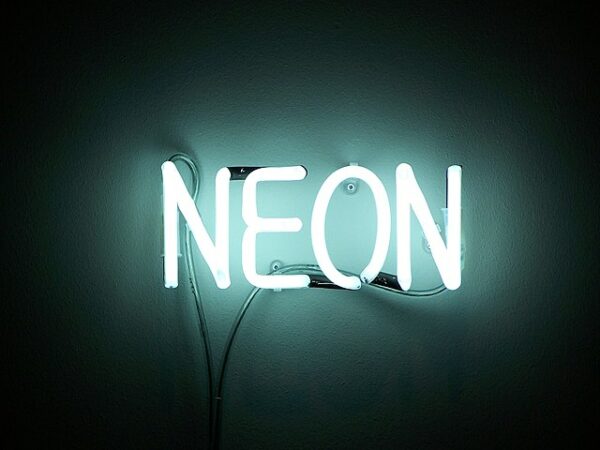
The science behind neon was deceptively simple. When an electrical current passes through a sealed glass tube filled with neon gas at low pressure, the gas emits an intense reddish-orange glow. The effect had been known to physicists for decades, but Claude, who had made his fortune extracting industrial gases from air, understood something others had missed: neon was not merely bright. It was legible at distance, stable over time, and capable of being bent—literally—into words, symbols, and shapes.
His 1915 patent formalized that leap. It described not just a glowing tube, but a system: durable electrodes, reliable power, and glasswork precise enough to sustain continuous illumination. The patent marked the moment when neon crossed the boundary from scientific curiosity to commercial instrument. Light could now sell.
The timing mattered. Europe was engulfed in the First World War, and civilian life was already being reorganized by industrial logic—factories running around the clock, transportation networks expanding, and urban populations swelling. When peace returned, cities would hunger for spectacle, reassurance, and novelty. Neon was ready to supply all three.
Claude first demonstrated neon signs publicly in Paris before the war, but it was after his patent that the technology spread outward, first across Europe and then, decisively, to the United States. By the 1920s, neon signs were climbing façades and rooftops, announcing theaters, cafés, hotels, and automobile dealerships with a glow that seemed almost alive. Unlike incandescent bulbs, neon did not flicker timidly. It burned with confidence.
The cultural impact was immediate. Neon redefined the night. Streets that once dimmed after sunset now pulsed with color and motion. Urban space became layered—daylight commerce giving way to nocturnal consumption. The city learned to advertise itself after dark, and in doing so reshaped rhythms of work, leisure, and desire.
There was also something unmistakably modern in neon’s aesthetic. Its lines were clean, its glow artificial and unapologetic. Neon rejected nostalgia. It aligned instead with speed, machinery, and the future. Artists and filmmakers quickly absorbed its symbolism. Neon came to signify modernity itself—restless, electric, slightly dangerous.

Yet Claude’s invention also hinted at a deeper transformation. Advertising was no longer confined to persuasion through language or image alone; it now operated at the level of sensation. Neon demanded attention not by argument but by presence. You did not read it so much as encounter it. In that sense, the neon tube anticipated the sensory saturation of later mass media, from television screens to digital billboards.
By mid-century, neon would become so ubiquitous that it faded into the background, its radical novelty forgotten. But its legacy remained etched into the urban landscape. From the boulevards of Paris to the highways of America, neon taught cities how to glow.
On January 19, 1915, Georges Claude patented a tube of light. What followed was not just a new technology, but a new way of seeing the modern world—written, quite literally, in fire.