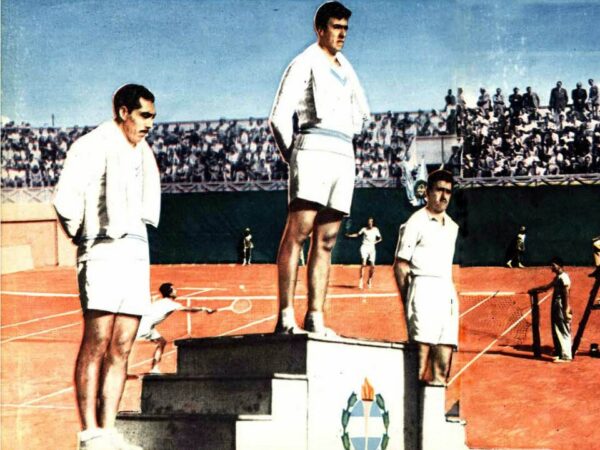
On February 25, 1951, before a packed stadium in Buenos Aires, Argentine President Juan Perón officially opened the first Pan American Games, inaugurating what would become the Western Hemisphere’s premier multi-sport competition. Modeled loosely on the modern Olympic Games but confined to the nations of the Americas, the event marked both a milestone in international athletics and a calculated display of Argentine ambition on the global stage.
The idea of a hemispheric games dated back decades. In the 1930s and 1940s, sports officials from across North and South America had pushed for a regular competition that would foster goodwill and athletic development among the republics of the New World. Plans were delayed by World War II, but in the postwar moment—amid rising nationalism and Cold War tensions—the project gained renewed urgency. Buenos Aires secured the honor of hosting the inaugural competition, and Perón’s government seized the opportunity.
Perón, who had come to power in 1946, championed a political program he called “Justicialismo,” blending populist social welfare policies with muscular nationalism. Hosting the first Pan American Games allowed his administration to showcase Argentina as modern, organized, and culturally central to the hemisphere. The capital city underwent improvements to sporting facilities and infrastructure, most notably the expansion of the racing and athletics venue that would serve as the principal stadium for the Games.
More than 2,500 athletes from 21 nations participated in the 1951 competition. Delegations arrived from across North, Central, and South America, including the United States, Canada, Brazil, Chile, Mexico, and Cuba. For many countries, especially smaller Latin American states, the Games offered an unprecedented opportunity to compete on a continental stage without the daunting scale of the Olympics.
The program featured 18 sports, among them athletics, swimming, boxing, basketball, cycling, fencing, gymnastics, and wrestling. Track and field drew particular attention, as did boxing—a sport in which Latin American athletes had long excelled. The United States ultimately topped the medal table, reflecting its depth of resources and training infrastructure. Argentina, however, performed strongly and celebrated its medalists as national heroes, reinforcing the government’s message that the country belonged among the hemisphere’s athletic leaders.
The opening ceremony itself blended pageantry and politics. Flags of the participating nations were paraded before tens of thousands of spectators. Bands played martial and patriotic music. Perón’s presence underscored the state’s direct sponsorship of the event. In a region often marked by rivalry and suspicion, the symbolism of unity—athletes marching not under arms but under banners of sport—was deliberate.

Yet the Games unfolded against a complicated geopolitical backdrop. The early 1950s were defined by Cold War alignments, economic strain, and domestic political tensions in many participating countries. In Argentina, Perón’s consolidation of power and tightening control over political opposition were already subjects of controversy. The Pan American Games, for supporters, demonstrated national vitality; for critics, they were also a showcase designed to legitimize an increasingly centralized regime.
Still, the athletic achievements stood on their own. Records were set. Rivalries were forged. Young competitors gained experience that would carry them to future Olympic podiums. The Games created a recurring forum—held every four years—that would rotate among host cities from Mexico City to Toronto to Rio de Janeiro. Over time, they became an essential proving ground for athletes from the Americas.