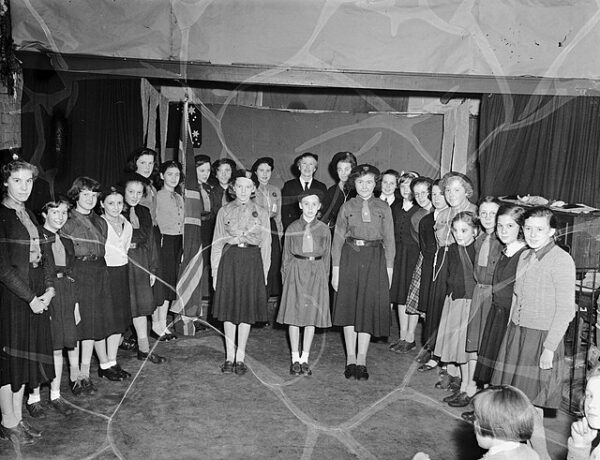
On March 12, 1912, in Savannah, Georgia, Juliette Gordon Low did something quietly revolutionary. She gathered a small group of girls—just eighteen in all—and introduced them to a radical idea for the early twentieth century: girls should learn leadership, self-reliance, and outdoor skills just as boys did.
The organization she launched that evening was called the American Girl Guides. Within a few years it would adopt the name Girl Scouts of the USA and grow into one of the most influential youth movements in American history.
To modern readers, the concept may seem obvious. But in 1912 it cut sharply against prevailing expectations. American society still defined girlhood primarily through domestic preparation. Schools emphasized etiquette, homemaking, and moral instruction—useful qualities, to be sure, but ones that assumed women’s lives would largely unfold within the private sphere.
Low envisioned something larger.
Born in Savannah in 1860, she grew up in a South still rebuilding after the Civil War. Her father had served as a Confederate officer, and her childhood unfolded in a society struggling to redefine itself in the aftermath of defeat and reconstruction. Yet Low’s life would be anything but provincial. She traveled widely in Europe, developed artistic interests, and moved comfortably within international social circles.
It was in Britain that she encountered an idea that would reshape her ambitions.
In the first decade of the twentieth century, British officer Robert Baden-Powell had launched the Boy Scout movement, a program built around outdoor adventure, civic duty, and character formation. The idea spread rapidly across the English-speaking world. Soon afterward, a parallel organization emerged for girls known as the Girl Guides.
Low immediately grasped the significance of the concept. Scouting offered more than recreation—it offered a philosophy of citizenship. Young people were taught practical skills, encouraged to serve their communities, and trained to think of themselves as capable participants in civic life.
Why, Low wondered, should that opportunity belong only to boys?
When she returned to Savannah in 1912, she set out to answer the question. The first troop met in a carriage house behind her family home. The program mixed traditional virtues with practical training. Girls learned first aid, signaling, knot tying, cooking over campfires, and identifying plants and animals in the wild. They practiced teamwork and leadership. They took hikes, organized service projects, and developed a sense of independence uncommon for girls of the era.
The approach proved remarkably appealing.
Within a year, new troops began forming in cities beyond Savannah. By 1913 the movement had spread across several states. Three years later, the organization formally adopted the name Girl Scouts, aligning itself with the broader international scouting movement while developing a distinctly American character.
Low herself—known affectionately as “Daisy”—became the movement’s most energetic ambassador. Despite severe hearing loss, she traveled tirelessly to promote the organization, recruit volunteers, and encourage communities to establish new troops. Her enthusiasm was contagious. By the early 1920s, thousands of American girls had joined.

Just as important was the organization’s social philosophy. The Girl Scouts welcomed girls from a wide range of backgrounds at a time when many civic institutions remained stratified by class and custom. The program emphasized character, service, and competence rather than pedigree.
Over time the organization adapted to the changing needs of American society. During both world wars, Girl Scouts contributed to home-front efforts—collecting supplies, assisting relief organizations, and supporting local communities. In later decades, the program expanded to include science education, environmental stewardship, and entrepreneurship.
Yet the core idea remained constant: young women should be encouraged to develop confidence, practical skill, and a sense of responsibility to their communities.
Today the Girl Scouts of the USA has served more than 50 million members since its founding. Its traditions—from camping expeditions to the iconic annual cookie sales—have become fixtures of American civic culture.