

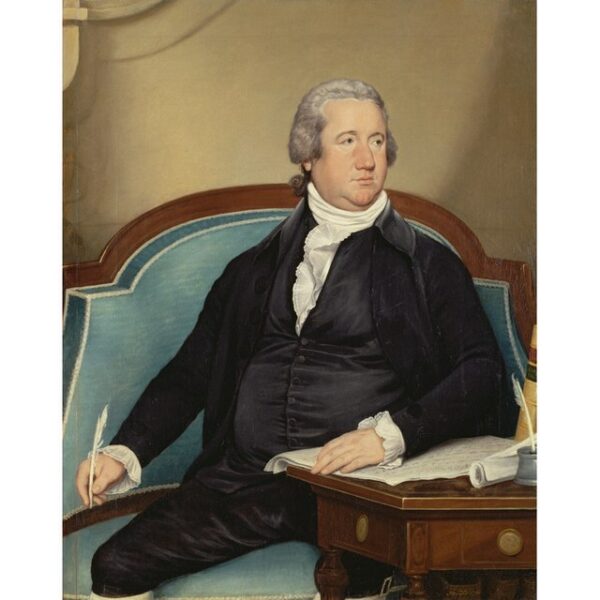
On April 1, 1789, in New York City, the newly formed United States House of Representatives reached a milestone that had eluded it for weeks: a quorum. With enough members finally present to conduct official business, the House moved swiftly to organize itself, electing Frederick Muhlenberg of Pennsylvania as its first Speaker. The moment marked a quiet but essential step in transforming the Constitution from theory into practice.
The delay in achieving a quorum underscored the fragility of the young republic. The First Congress, convened under the new United States Constitution, had been scheduled to begin its work weeks earlier, on March 4. But travel in the 18th century was slow and unpredictable. Representatives made their way to the temporary capital by horseback, carriage, and coastal vessel, often delayed by poor roads, bad weather, or sheer distance. Until a majority arrived, the House could not proceed.
By April 1, enough members had gathered in Federal Hall to meet the constitutional requirement. The House quickly turned to its first order of business: selecting a presiding officer. The choice fell on Muhlenberg, a Lutheran minister and respected political figure who had served in the Pennsylvania General Assembly. His election was not merely procedural. It signaled the beginning of a functioning legislative body—one capable of debate, lawmaking, and oversight.
Muhlenberg’s selection reflected both political balance and personal credibility. Though not among the most nationally prominent figures, he was widely regarded as steady and fair-minded, qualities essential in a chamber still defining its rules and norms. The role of Speaker itself was not yet fully formed. Unlike the modern office, which carries significant partisan and procedural authority, the early Speakership was closer to that of a moderator—tasked with maintaining order and facilitating discussion rather than directing legislative strategy.
Still, the symbolism mattered. The House of Representatives was designed to be the chamber closest to the people, with members elected directly by voters in the states. Its successful organization demonstrated that the new constitutional system could function as intended. Alongside the Senate and the soon-to-be-inaugurated presidency, it formed one of the three pillars of the federal government.
The events of that day also reflected broader uncertainties surrounding the new government. The Constitution had been ratified only months earlier, and skepticism remained widespread. Would the federal system prove durable, or would it collapse under the weight of regional divisions and logistical challenges? The slow start of Congress offered little reassurance. But the achievement of a quorum—and the orderly election of a Speaker—provided an early answer: the machinery of government, however imperfect, could be set in motion.

Within days, the House would begin addressing foundational questions. Members would establish rules of procedure, coordinate with the Senate, and prepare to consider legislation. Among the most consequential early debates would be the push for a bill of rights, a demand that had emerged during the ratification process. Though not resolved on April 1, the groundwork laid that day made such deliberations possible.
Muhlenberg himself would go on to serve multiple terms as Speaker, helping to guide the House through its formative years. His tenure coincided with the presidency of George Washington, who would be inaugurated later that month in the same city. Together, these developments marked the full activation of the new national government.