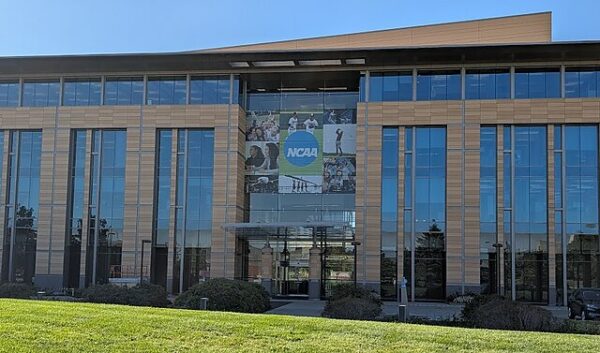
On March 31, 1906, representatives from colleges and universities across the United States convened to bring order to a rapidly expanding—and increasingly dangerous—world of intercollegiate athletics. The result was the creation of the Intercollegiate Athletic Association of the United States (IAAUS), an organization that would later be renamed the National Collegiate Athletic Association and grow into the central regulatory authority for college sports in America.
The push for reform did not emerge in a vacuum. By the early 20th century, college football had become one of the most popular—and most brutal—sports in the country. Games were often chaotic, with inconsistent rules, minimal protective equipment, and formations that encouraged mass collisions. In 1905 alone, at least 18 players were killed and more than 150 seriously injured, prompting widespread public concern. Newspapers called for reform, while some institutions considered abolishing football altogether.
The crisis reached the highest levels of government. President Theodore Roosevelt, himself an advocate of physical vigor but alarmed by the sport’s excesses, summoned representatives from leading universities to the White House in October 1905. He urged them to clean up the game—preserve its competitive spirit, but eliminate the violence that threatened both players and the sport’s future. Roosevelt did not dictate specific reforms, but his intervention helped galvanize momentum toward collective action.
In the months that followed, colleges began to recognize that piecemeal solutions would not suffice. What was needed was a centralized body capable of establishing uniform rules and enforcing them across institutions. The March 1906 meeting formalized that effort. The IAAUS was tasked with regulating college athletics, standardizing rules—especially in football—and promoting what reformers called “amateur ideals,” emphasizing sportsmanship and educational values over unchecked competition.
One of the organization’s earliest and most consequential actions was the overhaul of football rules. Among the changes introduced in the years immediately following its founding were the legalization of the forward pass, the creation of a neutral zone between opposing lines, and stricter penalties for dangerous play. These reforms transformed the sport, reducing the frequency of mass formations and opening up the game into something more strategic and less lethal.
The IAAUS also sought to address broader concerns about the commercialization and professionalism creeping into college sports. Schools were recruiting athletes aggressively, sometimes offering financial inducements that blurred the line between amateur and professional competition. By establishing eligibility standards and promoting oversight, the organization aimed to preserve the idea that college athletics should complement, rather than overshadow, academic life.
In 1910, the IAAUS formally adopted a new name: the National Collegiate Athletic Association. The change reflected both its expanding role and its ambition to serve as the definitive governing body for intercollegiate athletics nationwide. Over time, the NCAA would grow in scope and authority, developing complex regulatory systems governing everything from recruiting practices to academic eligibility, championships, and television rights.

Yet the tensions present at its founding have never fully disappeared. The NCAA has long faced criticism from multiple directions—accused by some of overregulation and by others of failing to adequately protect athletes’ rights and welfare. Debates over amateurism, compensation, and the balance between athletics and education continue to shape the organization’s evolution well into the 21st century.
Still, the events of March 31, 1906, marked a turning point. Faced with a sport teetering between popularity and peril, American colleges chose coordination over chaos. The creation of the IAAUS—and its transformation into the NCAA—helped stabilize and standardize college athletics, ensuring their survival and setting the stage for the vast, complex enterprise they would become.