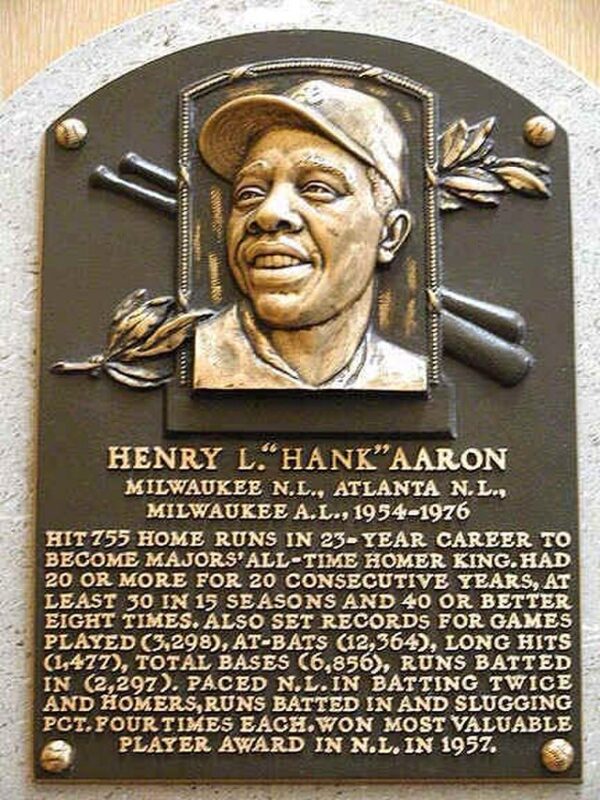
On April 8, 1974, Hank Aaron stepped to the plate at Atlanta-Fulton County Stadium with baseball history within reach. For decades, Babe Ruth’s mark of 714 career home runs had stood as one of the sport’s most enduring records. Aaron, after years of steady production, stood one swing away from surpassing it.
The game matched the Atlanta Braves against the Los Angeles Dodgers. On the mound was left-hander Al Downing. Aaron had tied Ruth’s record just days earlier on Opening Day in Cincinnati, ensuring that the next home run would make him the all-time leader.
The moment came in the fourth inning. With one out and a runner aboard, Downing delivered a pitch over the plate. Aaron turned on it and drove the ball deep to left-center field. It carried over the wall and into the stands for his 715th home run.
The crowd responded immediately. Fans rose to their feet as the ball cleared the fence, and fireworks followed as Aaron began his trip around the bases. Two spectators briefly ran onto the field and paced him before being escorted away. By the time Aaron reached home plate, he was surrounded by teammates, and shortly afterward embraced by his parents.
The home run ended one of the most closely followed pursuits in baseball history. Ruth’s record had stood since 1935, shaping how generations of fans understood power hitting. Aaron’s climb toward it, however, unfolded under far different circumstances.
As he approached the record during the 1973 season and into 1974, Aaron received a large volume of mail, including threats and racist messages. The reaction reflected tensions that extended beyond sports, as some opposed the idea of a Black player surpassing Ruth’s record. Security measures followed Aaron throughout the final stretch of the pursuit.
He continued to play through it. Aaron’s approach remained consistent with the style that had defined his career—controlled, efficient, and durable. Unlike Ruth, whose home runs often came in dramatic bursts, Aaron accumulated his total through sustained excellence over two decades.

The record-breaking home run did not immediately end debate about baseball’s past or future. But it did establish a new standard. Aaron would go on to finish his career with 755 home runs, extending the mark he set in Atlanta.
The scene on April 8 remains one of the most recognizable moments in the sport’s history: the swing, the ball clearing the fence, and Aaron circling the bases as the crowd rose around him.