

On December 18, 2019, the United States House of Representatives voted to impeach President Donald J. Trump, marking only the third time in American history that a sitting president had been formally charged with “high crimes and misdemeanors.” The vote followed a bitter, fast-moving inquiry centered on Trump’s dealings with Ukraine and deepened an already historic era of partisan polarization in American politics. For years Democrats had appeared willing to impeach the president no matter what.
The impeachment stemmed from a July 25, 2019 phone call between Trump and Ukrainian President Volodymyr Zelensky. During the call, Trump urged Zelensky to investigate former Vice President Joe Biden and his son, Hunter Biden, who had served on the board of a Ukrainian energy company. Around the same time, the Trump administration had placed a hold on nearly $400 million in congressionally approved military aid to Ukraine, which was then engaged in a conflict with Russian-backed separatists. The aid was later released, but Democrats argued that Trump had improperly leveraged U.S. foreign policy to pressure a foreign government for personal political gain.
The controversy erupted publicly in September after a whistleblower complaint from within the intelligence community alleged that the president had abused his power and sought foreign interference in the 2020 election. House Speaker Nancy Pelosi initially resisted calls for impeachment but announced a formal inquiry on September 24, saying the president’s actions had violated his oath of office and threatened the integrity of American elections.
The House investigation unfolded at unusual speed. The Intelligence Committee, chaired by Rep. Adam Schiff (D-Calif.), conducted public hearings in November, calling diplomats, national security officials, and career civil servants who described what they viewed as an irregular foreign policy operation directed by Trump and his allies. Several witnesses testified that Ukraine had understood U.S. military aid and a coveted White House meeting to be conditioned on announcing investigations that would politically benefit Trump.
Republicans rejected those claims, arguing that no explicit quid pro quo had been proven and that the impeachment inquiry itself was unfair, rushed, and driven by partisan animus. Trump and his allies accused Democrats of weaponizing impeachment to overturn the results of the 2016 election. The White House refused to cooperate with the inquiry, instructing administration officials not to testify or provide documents, a move Democrats cited as further evidence of obstruction.
On December 10, House Democratic leaders unveiled two articles of impeachment. The first charged Trump with abuse of power, alleging that he solicited foreign interference in a U.S. election for personal political advantage. The second charged obstruction of Congress, citing the administration’s blanket refusal to comply with subpoenas issued during the inquiry.

The House vote on December 18 largely fell along party lines. The abuse of power article passed 230–197, while obstruction of Congress passed 229–198. All Republicans voted against both articles, joined by a small number of Democrats from swing districts. President Trump became the first U.S. president impeached without any support from the opposing party.
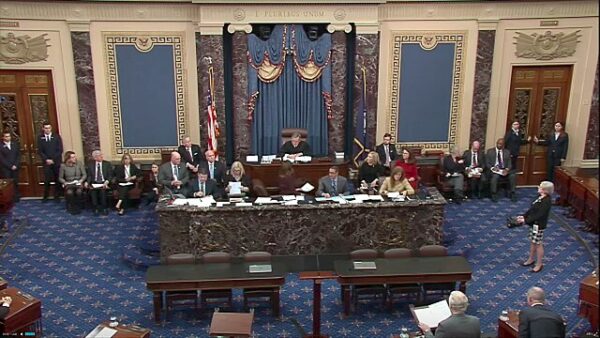
Impeachment did not remove Trump from office; it initiated a trial in the Senate, as required by the Constitution. That trial began in January 2020, with Republican senators holding a majority. On February 5, the Senate acquitted Trump on both charges, falling short of the two-thirds vote required for conviction.