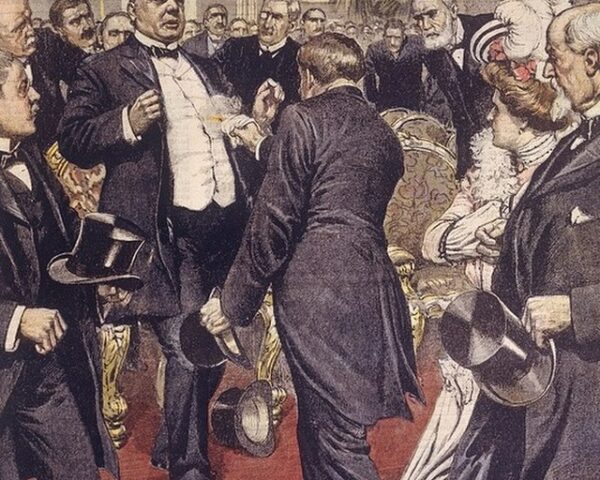
On a cold January morning in 1570, a single gunshot echoed through the streets of Linlithgow and across Scottish history. James Stewart, 1st Earl of Moray—regent of Scotland and guardian of the infant king—slumped from his horse, mortally wounded. With that shot, fired from a concealed position overlooking the High Street, Moray became the first known political leader in Europe to be assassinated with a firearm. It was not merely a murder. It was a signal that the age of medieval politics, governed by blades and blood feuds, was giving way to something colder, more distant, and more modern.
Moray ruled on behalf of his young half-nephew, James VI of Scotland, who had inherited the throne as an infant after the forced abdication of his mother, Mary, Queen of Scots. Scotland at the time was a kingdom fractured along religious, dynastic, and personal lines. The Protestant Reformation had shattered old loyalties. Mary’s supporters—many of them Catholic nobles—refused to accept her removal. Moray, a committed Protestant and skilled political operator, stood at the center of this storm.
As regent, Moray was effective and, to his enemies, unforgiving. He governed firmly, suppressed rebellion, and aligned Scotland closely with England, a move that enraged Marian loyalists who viewed him as a traitor to both blood and crown. His authority rested less on hereditary right than on political necessity, and necessity, in sixteenth-century Scotland, was a fragile foundation.
The assassin was James Hamilton of Bothwellhaugh, a member of the powerful Hamilton clan and a committed supporter of the deposed queen. According to contemporary accounts, Hamilton waited in a house owned by his uncle, bracing his musket on a windowsill carefully padded to steady the shot. When Moray rode past, Hamilton fired. The bullet struck Moray in the abdomen. He died within hours.
The method mattered as much as the act. Firearms existed in Europe for decades before 1570, but they had rarely been used in targeted political killings. This was assassination at a distance—deliberate, planned, and impersonal. No duel. No melee. No chance for defense. Power could now be challenged not only on the battlefield or in council chambers, but from a window, by a man unseen.
The psychological effect was immediate. Moray’s death shattered the uneasy balance holding Scotland together. Without his steady hand, the civil conflict between Marian forces and the king’s supporters intensified. Regents followed one another in quick succession, each weaker than the last. Violence escalated. Trust eroded. The infant king grew up in a country where authority was provisional and loyalty transactional.

For James VI, the lesson was indelible. He would later rule both Scotland and England as James I of England, carrying with him a lifelong obsession with security, authority, and the divine right of kings. Assassination—especially by unseen hands—terrified him. His reign would be marked by elaborate court rituals, intelligence networks, and harsh punishments for treason, all shaped by the memory of a regent cut down before his eyes, if not in person then in political inheritance.
Moray’s assassination also marked a turning point in European political violence. It foreshadowed a grim future in which rulers would increasingly fear not just rival armies but lone actors with new technologies. The firearm democratized political killing, lowering the physical barriers between grievance and power and eventually spurring revolution.