

January 28, 1915, marked a pivotal moment in American maritime history when an act of Congress formally created the United States Coast Guard as a branch of the United States Armed Forces—quietly reshaping how the nation would protect its shores, commerce, and citizens at sea.
The Coast Guard did not emerge as a wholly new institution. Instead, it was the product of consolidation, merging two long-standing federal services whose missions had increasingly overlapped. The Revenue Cutter Service, founded in 1790 at the urging of Treasury Secretary Alexander Hamilton, served as the young republic’s first seagoing armed force. Its cutters enforced customs laws, combated smuggling, and projected federal authority along America’s coasts and waterways. The Life-Saving Service, formally organized in 1878, pursued a different but equally vital charge: rescuing shipwrecked sailors along dangerous coastlines through a network of shore stations staffed by surfmen trained to operate in extreme conditions.
For decades, the two services operated independently, often responding to the same maritime hazards under separate chains of command. By the early twentieth century, that division increasingly appeared inefficient. America’s maritime footprint was expanding, driven by rising international trade, industrial growth, and overseas interests acquired after the Spanish-American War. Lawmakers and naval planners recognized that enforcing maritime law, conducting rescues, and defending coastal waters required a unified force with clear authority and operational flexibility.
Congress acted accordingly. The 1915 legislation merged the Revenue Cutter Service and the Life-Saving Service into a single organization and, crucially, designated it an armed force of the United States. That distinction mattered. Unlike other federal agencies with law-enforcement responsibilities, the Coast Guard would be both civilian and military in character—operating under civilian departments in peacetime, but subject to transfer to the Navy during war.
This dual status quickly proved its value. When the United States entered World War I in 1917, the Coast Guard was placed under Navy control. Its cutters escorted convoys across the Atlantic, hunted German submarines, and guarded American ports. The service’s seamless integration into wartime operations validated the logic of its creation and demonstrated the advantages of a maritime force already accustomed to disciplined, armed service.
But the Coast Guard’s importance was never confined to war. Its establishment reflected a broader understanding that national security extended beyond traditional battlefields. Smuggling networks, unsafe shipping practices, maritime disasters, and threats to commercial navigation all carried economic and human costs. The Coast Guard was designed to operate in this space—where law enforcement, humanitarian rescue, and defense overlapped.
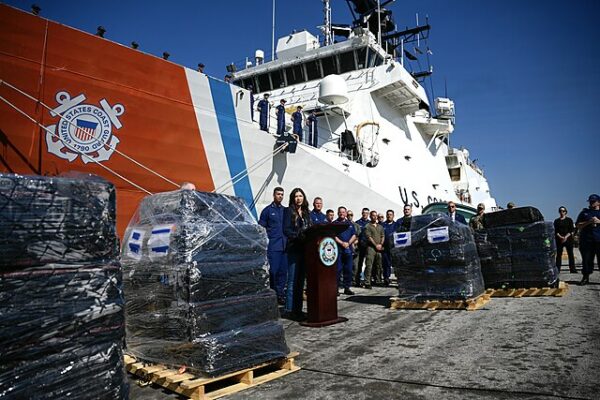
That mandate expanded steadily over time. During Prohibition, the Coast Guard became the federal government’s primary tool for intercepting rum-runners along the coasts. In World War II, once again transferred to the Navy, it played key roles in convoy protection and amphibious landings. In the decades that followed, its missions grew to include drug interdiction, migrant interdiction, icebreaking in polar regions, and environmental protection—tasks that blurred traditional distinctions between military and civilian authority.

The service’s endurance lies in its institutional design. Congress did not create a narrowly tailored force limited to a single threat or era. Instead, it established a flexible organization capable of adapting to new challenges as they emerged. That adaptability has allowed the Coast Guard to remain relevant across more than a century of technological change, shifting geopolitical realities, and evolving domestic priorities.
More than a century later, the United States Coast Guard remains what Congress intended it to be: an armed service built for the spaces between war and peace, enforcing the law, saving lives, and safeguarding the nation’s waters with little fanfare, but lasting consequence.