
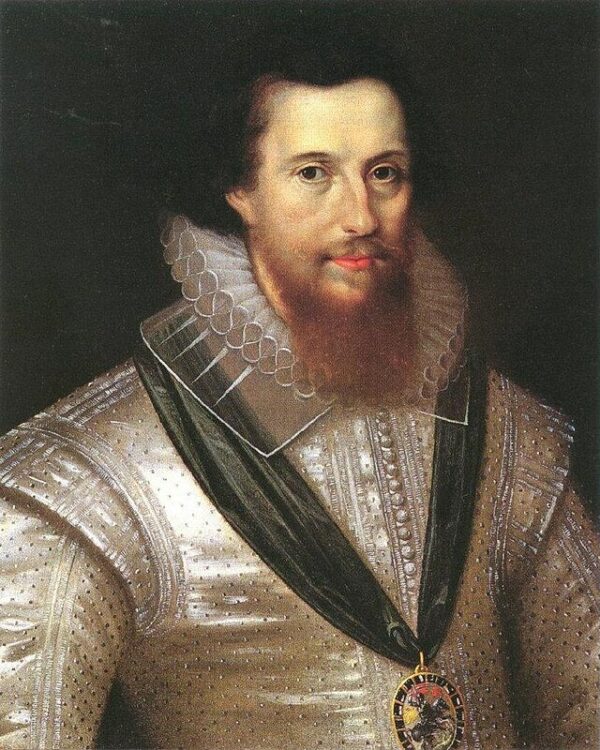
On February 8, 1601, one of the most striking political implosions of Elizabethan England played out in the streets of London. Robert Devereux, 2nd Earl of Essex, once the favored courtier of Queen Elizabeth I, launched a brief and badly miscalculated rebellion that collapsed within hours and ended his career—and his life.
Essex had been, for a time, everything Elizabeth seemed to admire. Young, charismatic, and aristocratic, he rose quickly at court and cultivated the image of a warrior-statesman. His role in the 1596 capture of Cádiz from Spain made him a public hero, and his close relationship with the queen gave him unusual access to power. But Essex was also volatile, impatient, and ill-suited to the cautious, bureaucratic style that increasingly defined Elizabeth’s government.
That style was embodied by figures such as Robert Cecil, the queen’s chief adviser, whose influence grew as Essex’s waned. The rivalry between the two men was more than personal. It reflected a broader shift in English politics, away from noble dominance and toward centralized administration. Essex never adapted to that shift—and he resented those who had.
His downfall accelerated after his disastrous command in Ireland in 1599. Sent to suppress a rebellion led by Hugh O’Neill, Essex mismanaged the campaign, drained resources, and negotiated a truce without authorization. When he abruptly returned to England against the queen’s orders, Elizabeth responded decisively. She placed him under house arrest, stripped him of offices, and cut off the monopolies that funded his household. Politically sidelined and financially strained, Essex found himself isolated.
By early 1601, Essex had convinced himself that his enemies were plotting to destroy him permanently and that the queen was being misled by corrupt advisers. That belief fueled a desperate plan: stage a public show of force in London, rally popular support, and compel access to Elizabeth. Essex framed the effort not as rebellion, but as a corrective—an attempt to “save” the queen from bad counsel.
The reality was far less convincing. On the morning of February 8, Essex and roughly 200 followers gathered at Essex House on the Strand. They marched into the City of London calling for support. None came. Shopkeepers closed their doors. City officials raised the alarm. Bridges across the Thames were secured, cutting off key routes and signaling that the authorities were firmly in control.
As royal forces mobilized, the uprising unraveled. Essex failed to gain traction with Londoners, many of whom feared disorder more than court intrigue. His supporters drifted away. By mid-afternoon, Essex retreated to Essex House, where he was quickly surrounded. After a short standoff, he surrendered. The rebellion was over almost as soon as it began.
Essex was arrested and charged with high treason. At his trial later that month, he argued that he never intended to harm the queen and only sought to address grievances at court. The court was unmoved. In a political system that had spent decades suppressing private armies and noble revolts, armed action in the capital could only be interpreted one way.

On February 25, 1601, Essex was executed at the Tower of London. Elizabeth, according to contemporaries, agonized over the decision. Essex had once been her favorite, and she had repeatedly forgiven his earlier offenses. This time, she did not. To spare him would have risked encouraging future challenges to royal authority at a moment when succession anxieties were already mounting.
The failed rebellion marked more than the end of one man’s career. It underscored how firmly Elizabethan England had moved beyond medieval politics. Personal loyalty, noble reputation, and theatrical gestures no longer outweighed institutional authority. Power flowed through councils and offices, not through crowds summoned by charisma.