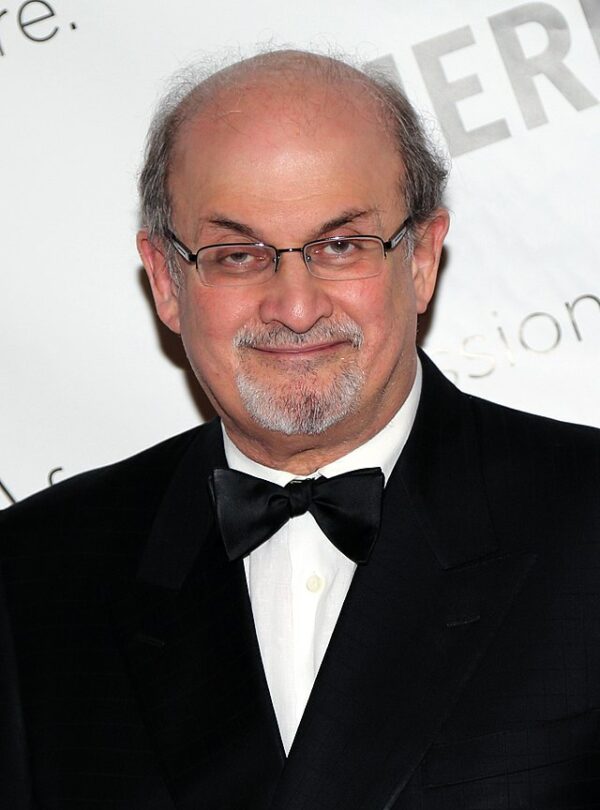
On March 7, 1989, a literary controversy detonated into a full-blown diplomatic crisis. Iran severed relations with the United Kingdom after an escalating dispute over Salman Rushdie’s novel The Satanic Verses, a book that had already ignited protests across the Muslim world and forced its author into hiding under British police protection.
The conflict had been building for months. Rushdie’s novel, published in September 1988, was a sprawling work of magical realism that wove together migration, faith, and identity. Yet several passages—particularly dream sequences loosely inspired by early Islamic history—were widely interpreted by critics as mocking the Prophet Muhammad and ridiculing sacred Islamic traditions. Demonstrations erupted almost immediately after the book appeared.
Protests broke out first in South Asia, where the novel was banned in India within weeks of publication. Soon the controversy spread across Pakistan, the Middle East, and parts of Europe. In the English city of Bradford, demonstrators publicly burned copies of the book. Religious leaders condemned Rushdie as a blasphemer, and calls for punishment began circulating in mosques and political gatherings across the Islamic world.
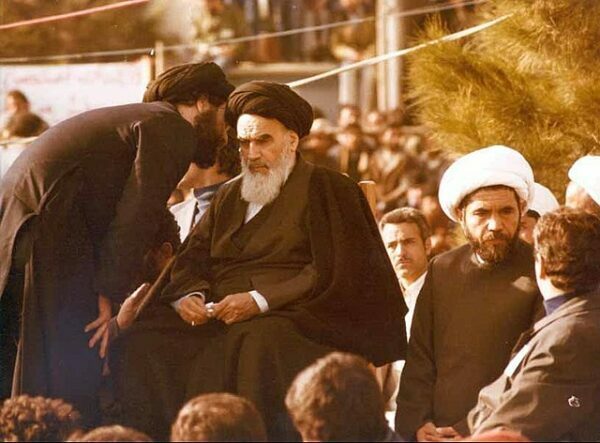
The dispute might have remained a bitter cultural controversy. Instead, it became an international crisis on February 14, 1989. That day Ayatollah Ruhollah Khomeini, the aging cleric who had led Iran’s Islamic Revolution a decade earlier, issued a fatwa declaring that Rushdie had committed blasphemy and calling on Muslims everywhere to execute him.
The decree stunned Western governments. In effect, Iran’s supreme leader had placed a death sentence on a British citizen living under the protection of the United Kingdom. Religious foundations and Iranian institutions soon attached financial rewards to the ruling, offering millions of dollars to anyone willing to carry it out.
London responded by placing Rushdie under round-the-clock police protection. The author disappeared from public view almost overnight, moving between safe houses guarded by armed security. For the British government, however, the issue was larger than the safety of one writer. Officials insisted that a foreign government had no authority to threaten violence against a citizen for the content of a book published under the protections of British law.
Prime Minister Margaret Thatcher’s government rejected demands from Tehran that the novel be banned or that Rushdie be prosecuted. Britain’s position was blunt: however offensive some readers might find the book, the country’s tradition of free expression placed literature beyond the reach of religious censorship.
Iran’s leadership saw the matter very differently. Officials in Tehran accused Britain of deliberately insulting Islam and sheltering a man they described as an enemy of the faith. Iranian state media amplified the outrage, while demonstrations continued across several Muslim-majority countries.
The standoff reached its breaking point less than a month after the fatwa. On March 7, 1989, Iran formally severed diplomatic relations with the United Kingdom. Iranian diplomats were recalled from London, and British representatives were expelled from Tehran. Iranian officials declared that Britain’s refusal to condemn Rushdie or suppress the novel made it complicit in the alleged insult to Islam.
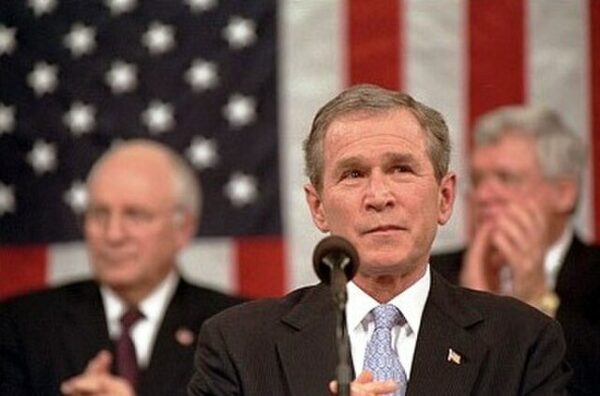
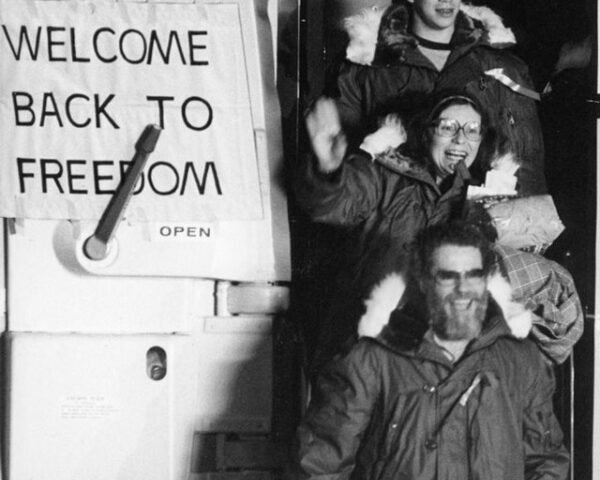
The rupture represented one of the most dramatic confrontations between Iran and a Western power since the 1979 hostage crisis. European governments reacted with alarm. Several members of the European Community temporarily withdrew their ambassadors from Tehran in solidarity with Britain, while others worried that the dispute could inflame tensions between the Islamic world and the West.

For Rushdie himself, the crisis defined the next decade of his life. Living under constant threat of assassination, he adopted the alias “Joseph Anton,” a combination of the names of writers Joseph Conrad and Anton Chekhov. His whereabouts were kept secret as British security services worked to prevent attempts on his life.
The diplomatic freeze between Britain and Iran lingered throughout the 1990s. Only in 1998 did Iranian officials signal that they would no longer actively support efforts to kill Rushdie as part of a broader effort to restore relations with Europe. Even then, the original fatwa issued by Khomeini was never formally rescinded.
The events of March 1989 left a lasting mark on global politics. What began as a dispute over a novel evolved into a defining clash between two competing principles: the Western commitment to free expression and the insistence by revolutionary Iran that insults to religion must be met with punishment. More than three decades later, the controversy still stands as one of the most consequential literary battles of the modern era.