On March 8, 1775—barely six weeks before the first shots of the American Revolution—a small but incendiary essay appeared in the Pennsylvania Journal and Weekly Advertiser. The piece carried no author’s name. Its title, however, left little doubt about its subject: “African Slavery in America.”
The article would become one of the earliest known abolitionist writings published in the American colonies.
At the time, the colonies were gripped by rising tensions with Great Britain. Parliament’s coercive measures had hardened colonial resistance, and revolutionary rhetoric increasingly invoked the language of liberty, natural rights, and resistance to tyranny. Yet beneath these declarations of freedom lay an obvious contradiction: hundreds of thousands of Africans and their descendants remained enslaved throughout British North America.
The anonymous writer confronted that contradiction directly.
Slavery, the essay argued, was not merely regrettable or economically necessary. It was morally indefensible. Enslaving Africans, the author wrote, violated both Christian teachings and the natural rights philosophy that colonial leaders themselves were increasingly embracing.
The piece described the brutality of the transatlantic slave trade in stark terms. Africans were seized, transported across the ocean in horrific conditions, and sold like livestock upon arrival in the Americas. Families were shattered. Violence and coercion enforced obedience. The system, the writer argued, degraded not only the enslaved but also the society that tolerated it.
Most strikingly, the essay did not stop at condemning the cruelty of slavery. It called openly for its abolition.
Such language was extraordinary for the period. Although some religious groups—particularly Quakers in Pennsylvania—had begun questioning slavery’s morality, few writers in the colonies had publicly demanded its outright elimination. The colonial economy, especially in the South, depended heavily on enslaved labor, making the topic politically explosive.
Yet the essay insisted that the institution could not be reconciled with the principles Americans were invoking against British rule. If colonists claimed liberty as a natural right, the writer argued, they could not consistently deny that right to others.
In effect, the author challenged the revolutionary generation to live up to its own rhetoric.
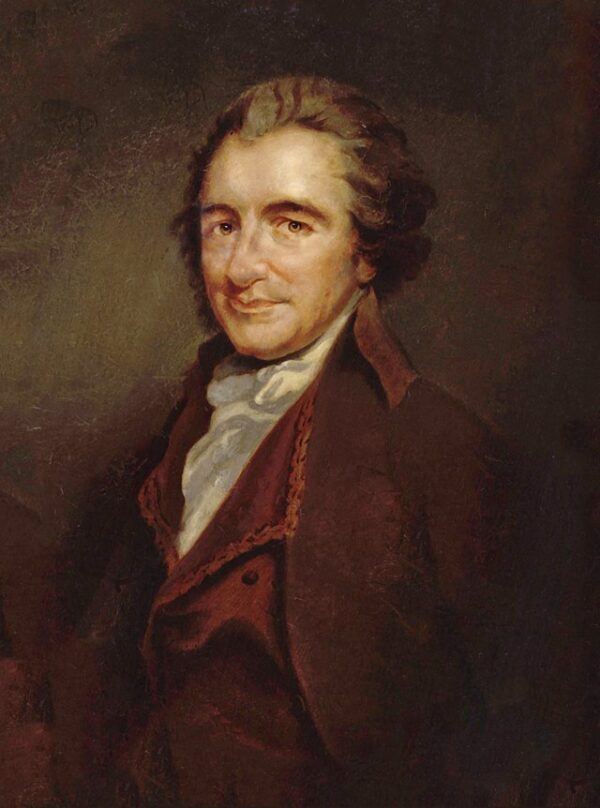
The identity of the writer has long been debated. Some historians believe the essay may have been penned by Thomas Paine, the English-born pamphleteer who had recently arrived in Philadelphia. Paine would soon become famous for Common Sense (1776), the electrifying pamphlet that helped persuade many Americans to embrace independence from Britain.
Several elements of “African Slavery in America” resemble Paine’s later style—clear, direct prose combined with sweeping moral arguments rooted in natural rights. Paine would later write forcefully about liberty and human equality in works such as The Rights of Man. Still, historians caution that no definitive proof connects him to the 1775 essay.
The author’s identity remains uncertain.
What is clear is the essay’s place in the intellectual ferment of the revolutionary era. The American Revolution was built on powerful ideas about freedom, self-government, and the rights of individuals. But those ideas existed alongside institutions that contradicted them.

Slavery was the most glaring example.
The United States would soon declare that “all men are created equal,” yet the new nation would preserve slavery for nearly another century. Political compromises, economic interests, and regional divisions allowed the institution to survive long after independence.
Even so, the seeds of opposition had already been planted.
The anonymous writer who published “African Slavery in America” in March 1775 was among the first in the colonies to say openly what later generations of abolitionists would repeat with increasing urgency: that a society dedicated to liberty could not permanently coexist with human bondage.