
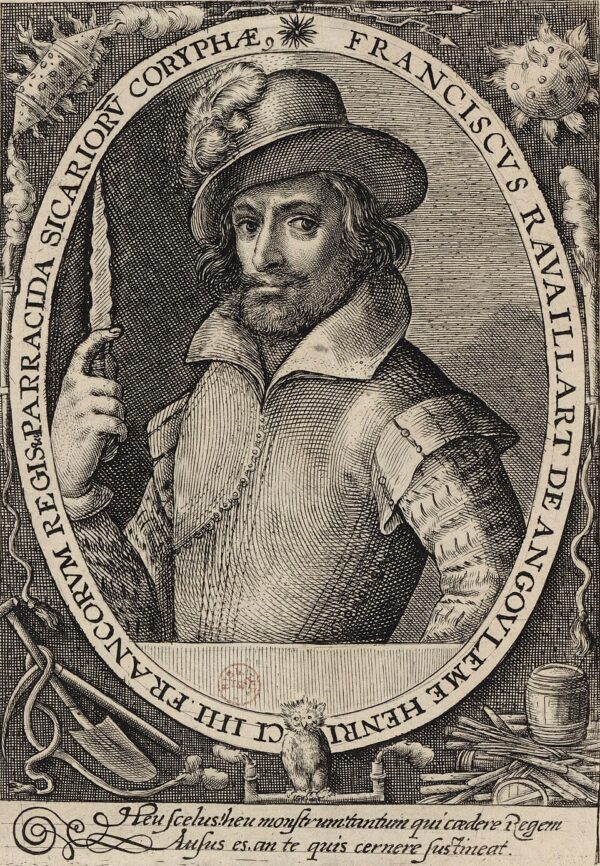
On May 14, 1610, France lost the king who had ended its religious wars and gained a child monarch who inherited both his throne and his unfinished work. Henry IV, the first Bourbon king of France, was assassinated in Paris by François Ravaillac, a Catholic zealot who believed the king had betrayed the faith. Within hours, Henry’s 8-year-old son became Louis XIII, and the kingdom passed from a battle-tested ruler to a regency shadowed by fear, faction, and civil war’s memory.
Henry IV’s death shocked France because his reign had been built around survival. Born Henry of Navarre, he came to power after decades of conflict between Catholics and Huguenots, the French Protestants. He fought as a Protestant prince, survived the St. Bartholomew’s Day Massacre, and claimed the throne in 1589 after the assassination of Henry III. But France was still overwhelmingly Catholic, and many refused to accept a Protestant king. Henry’s conversion to Catholicism in 1593, often associated with the phrase “Paris is well worth a Mass,” was both personal and political. It opened the capital and restored royal authority.
His most durable achievement came in 1598 with the Edict of Nantes, which gave Huguenots limited rights of worship and legal protections while preserving Catholicism as the dominant faith. The edict did not create modern religious liberty or erase confessional suspicion. But it ended the most destructive phase of France’s religious wars and gave the monarchy room to rebuild. Under Henry and his chief minister, the Duke of Sully, France repaired its finances, promoted agriculture, rebuilt roads, and restored order after a generation of bloodshed.
That settlement also made Henry hated by extremists on both sides. To some Catholics, his conversion never overcame the suspicion that he remained a heretic at heart. To some Protestants, his decision to become Catholic looked like betrayal. The kingdom’s peace depended less on reconciliation than on the authority and political skill of one man. When Henry began preparing for a military campaign that many Catholics feared would be directed against Habsburg power and Catholic interests, Ravaillac saw himself as an instrument of divine judgment.
On May 14, Henry’s carriage became trapped in Paris traffic on the Rue de la Ferronnerie. Ravaillac climbed onto the wheel and stabbed the king through an open side of the coach. Henry died quickly. The assassination was not merely a murder. It was a reminder that religious fanaticism, though contained by royal power, had not disappeared from French public life.
Ravaillac was arrested at once and later executed with extraordinary brutality. Authorities sought to determine whether he had acted alone or as part of a wider conspiracy. No convincing evidence of a larger plot emerged, but suspicion itself became politically useful. In a kingdom still haunted by sectarian violence, the idea of hidden enemies could not easily be dismissed.

The succession, however, proceeded immediately. Louis XIII became king the same day, but because he was a child, real power passed to his mother, Marie de’ Medici, as regent. Her regency exposed the fragility of Henry’s achievement. Court factions revived. Great nobles maneuvered for influence. Foreign policy shifted. The discipline associated with Henry’s personal rule gave way to uncertainty.
Yet the monarchy endured. Louis XIII would later rule alongside Cardinal Richelieu, whose centralizing policies strengthened the French state and helped make Bourbon France a dominant European power. In that sense, Henry IV’s assassination did not destroy the monarchy; it accelerated the problem his successors would spend decades trying to solve: how to make royal authority stronger than noble faction, religious division, and private violence.