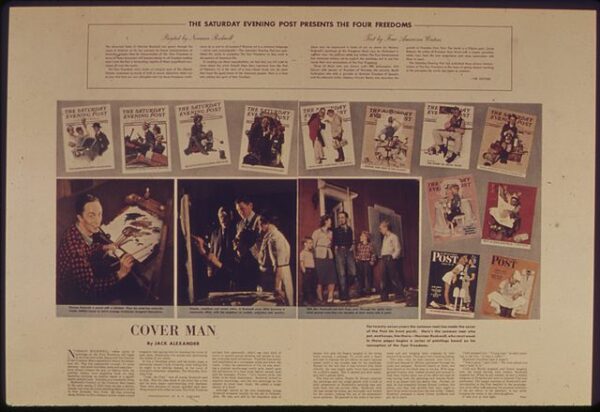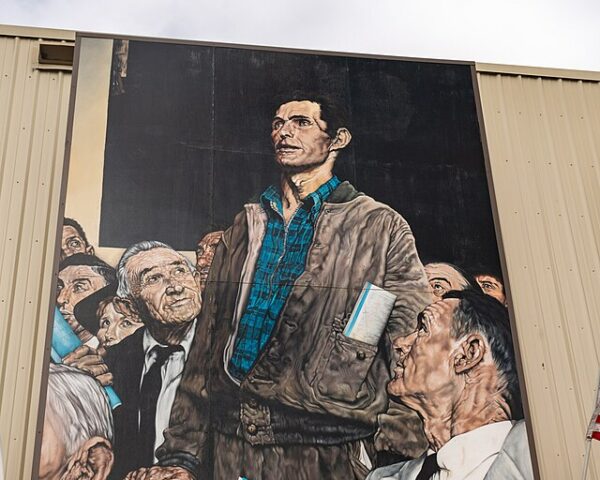
On February 20, 1943, The Saturday Evening Post published the first installment of what would become one of the most recognizable artistic statements of the Second World War: Norman Rockwell’s “Four Freedoms.” Inspired by President Franklin D. Roosevelt’s 1941 State of the Union address,…
Read MoreOn February 20, 1943, The Saturday Evening Post published the first of Norman Rockwell’s Four Freedoms paintings, a series of illustrations inspired by President Franklin D. Roosevelt’s 1941 State of the Union address. In that speech, Roosevelt outlined his vision for a world based…
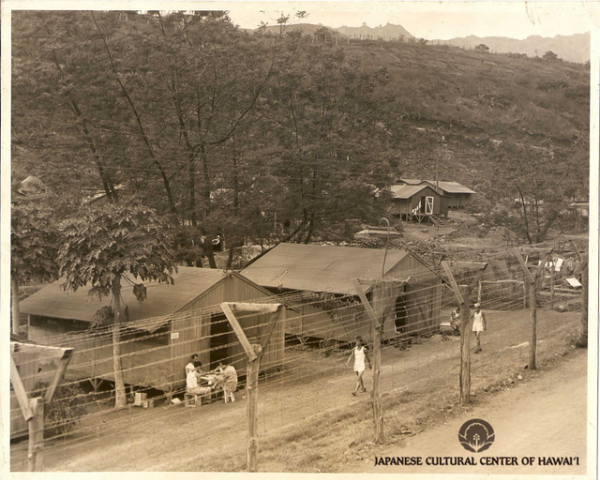
Read MoreOn February 19, 1942, President Franklin D. Roosevelt signed Executive Order 9066, granting the military broad authority to exclude individuals from designated areas. Though the order did not explicitly mention Japanese Americans, it became the legal basis for one of the most severe violations…
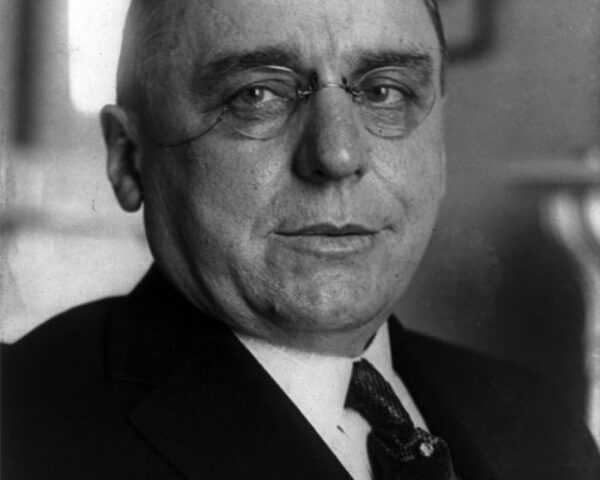
Read MoreOn February 15, 1933, in Miami, a single handgun cracked through the warm evening air and altered the course of American political history. The target was President-elect Franklin D. Roosevelt. The man who would die instead was Anton J. Cermak, the sitting mayor of…
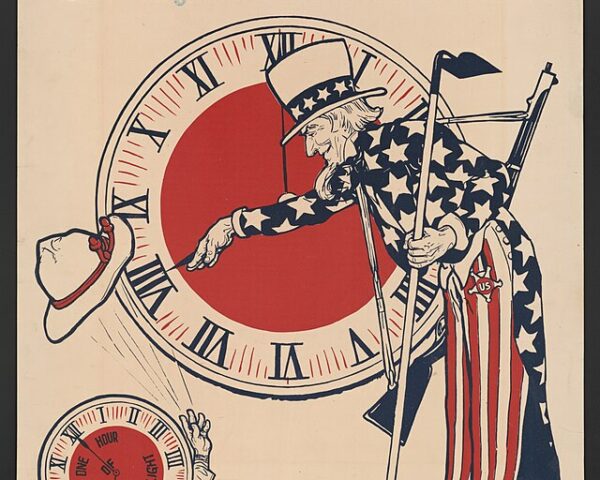
Read MoreOn February 9, 1942, the United States did something that would have seemed mildly absurd just a few years earlier: it reset the nation’s clocks—permanently, at least for the duration of the war. With the country barely two months removed from Pearl Harbor, Congress…
Read MoreOn January 23, 1941, Charles Lindbergh, the renowned aviator celebrated for his groundbreaking 1927 solo transatlantic flight, delivered a controversial speech before the U.S. Congress. In his testimony, Lindbergh advocated for a neutrality pact with Nazi Germany, a stance that would polarize public opinion…
Read MoreOn January 20, 1937, Franklin D. Roosevelt and John Nance Garner began their second terms as President and Vice President of the United States. This marked the first time a presidential inauguration occurred on January 20, a change brought about by the 20th Amendment…
Read MoreOn January 14, 1943, in the midst of a global war whose outcome was anything but assured, Franklin D. Roosevelt and Winston Churchill opened what would become one of the most consequential Allied strategy meetings of World War II: the Casablanca Conference. Convened in…
Read MoreOn January 6, 1941, Congress heard one of the most iconic speeches in American history. Franklin Delano Roosevelt, the 32nd President of the United States, delivered what became known as the Four Freedoms Speech. This speech was part of his State of the Union…
Read MoreOn December 7, 1941, the United States was thrust into global war when aircraft of the Imperial Japanese Navy launched a sudden and meticulously coordinated attack on the U.S. Pacific Fleet at Pearl Harbor, Hawaii. The assault began early on a quiet Sunday morning,…
Read More