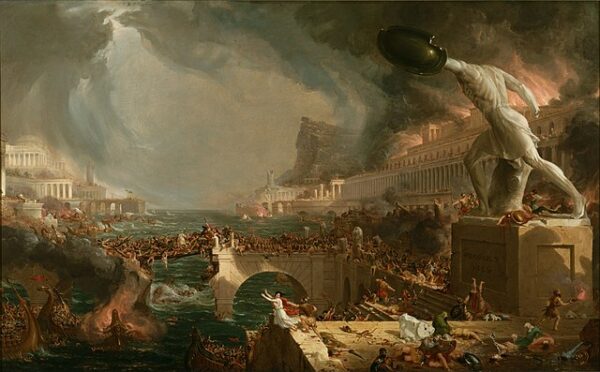
On September 4, 476 AD, a defining moment in history marked the end of the Western Roman Empire—a political entity that had dominated the Mediterranean world for centuries. This date saw the deposition of Romulus Augustulus, the last Roman emperor of the West, by…
Read More“Rome, once the capital of the world, is now the grave of the Roman people,” wrote Saint Jerome of a cataclysm in 410 of a disaster that few could have predicted. On August 27 of that year, following 800 years of military domination and…
Read MoreThe Roman Republic, still reeling from the assassination of Julius Caesar the previous year, faced another constitutional crisis in the summer of 43 BC. Caesar’s designated heir—his great-nephew Gaius Octavius, now calling himself Caesar—was only nineteen years old. Yet by August 19 of that…
Read MoreAugust 9, 48 BC, saw a battle that shaped the course of history for a thousand years. Pitting Julius Caesar against Pompey, the Battle of Pharsalus was a pivotal conflict during the Roman Civil War. This decisive battle occurred near the town of Pharsalus…
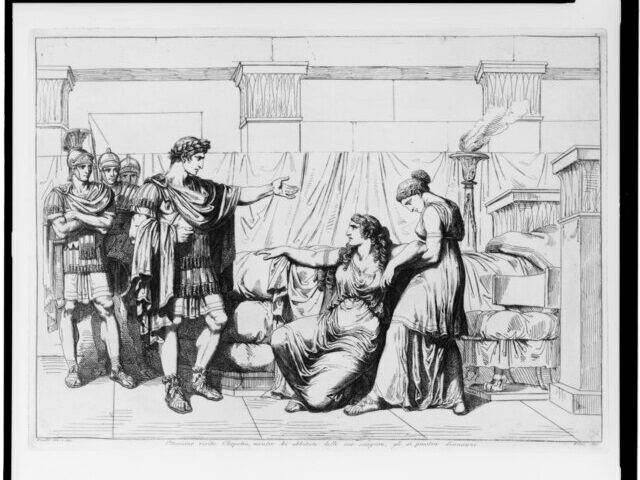
Read MoreOn August 1, 30 BC, a defining moment in ancient history unfolded as Octavian, the future Augustus Caesar, conquered the city of Alexandria. This conquest marked the culmination of a power struggle that would reshape the Roman Empire and influence the course of Western…
Read MoreJuly 25, 305, one of Rome’s most extraordinary emperors received a crown from his army, reshaping history for the centuries that followed. Born in Naissus, a city in the Balkans, Constantine The Great ascended to power during a critical period of the Roman Empire’s…
Read MoreOn July 19, 64, the inhabitants of the Eternal City found themselves caught in an inferno. The fire allegedly started sometime in the middle of the previous night in the bustling commercial district near the Circus Maximus and quickly spread due to strong winds…
Read MoreOn 8th June 452 AD, the Roman Empire’s biggest bogeyman came to invade Italy: Attila. Referred to as “scourge of God” by his opponents, Attila’s empire stretched thousands of miles from the Ural River to the Rhine River and from the Danube River to…
Read MoreOn May 25, 567 B.C., Servius Tullius, the sixth king of Rome, celebrated a triumph over the Etruscans, marking one of the earliest recorded moments in which Rome presented itself not merely as a surviving city, but as an expanding power in central Italy.…
Read MoreOn May 20, 325, the First Council of Nicaea formally opened, marking one of the most consequential gatherings in the history of Christianity. Convened by the Roman emperor Constantine, the council brought together bishops from across the empire to settle a theological dispute that…
Read More