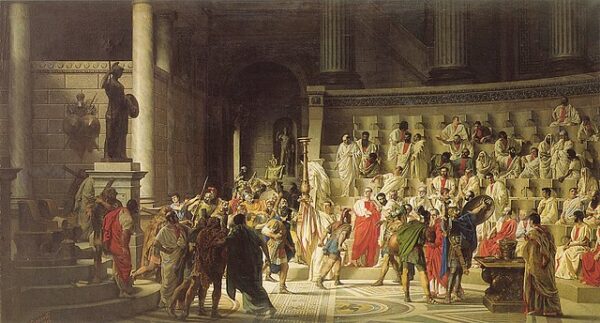

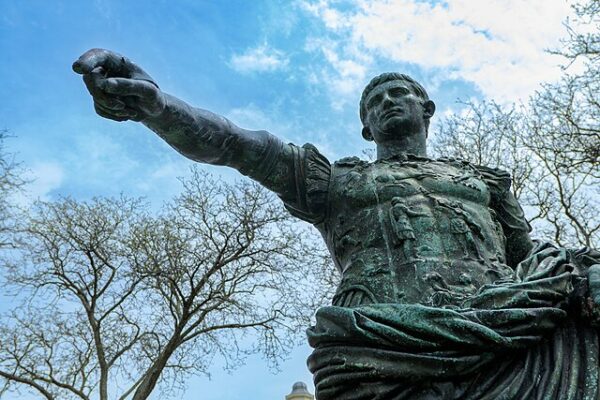
On January 16, 27 BC, the Roman Senate conferred upon Gaius Julius Caesar Octavianus the honorific title Augustus—a moment that has come to symbolize the end of the Roman Republic and the beginning of the Roman Empire. The significance of the act lay not…
Read MoreOn January 7, 49 BC, the Roman Republic crossed a point of no return—not with the tramp of legions or the clash of steel, but with a decree of the Senate and the flight of two frightened magistrates. What followed would soon culminate in…
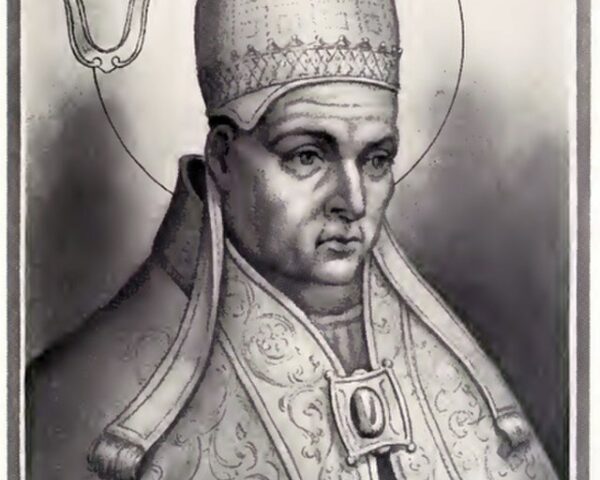
Read MoreOn December 22, 401 AD, Pope Innocent I ascended to the papal throne, becoming one of the most influential leaders of early Christianity. What makes his papacy especially remarkable is that he is the only pope in history confirmed to have directly succeeded his…
Read MoreThe winter of 627 opened with an army that should not have existed. After years of catastrophic defeats, territorial losses stretching from Egypt to Syria, and a Persian occupation that once reached the very gates of Constantinople, the Byzantine Empire was expected—by friends and…
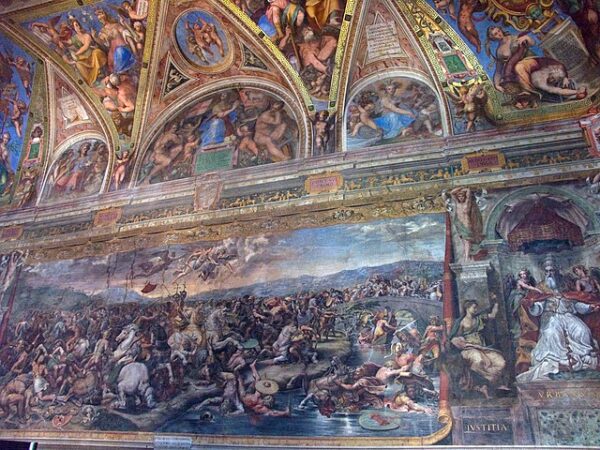
Read MoreThe morning of October 29, 312, dawned over a city poised between dread and deliverance. Two days earlier, on the banks of the Tiber just north of Rome, the armies of Constantine and Maxentius had met in a climactic struggle that would reshape the…
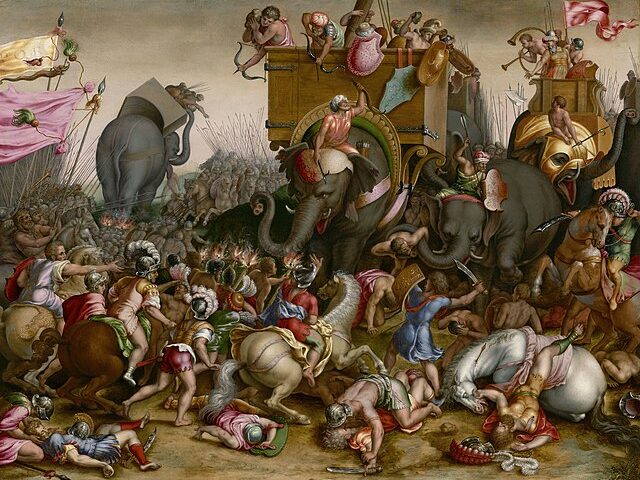
Read MoreOne of history’s most important battles occurred on this date in 202 BC, deciding the fate of two empires and changing the course of Western history. The Battle of Zama was a pivotal engagement between the forces of Rome, led by Scipio Africanus, and…
Read More