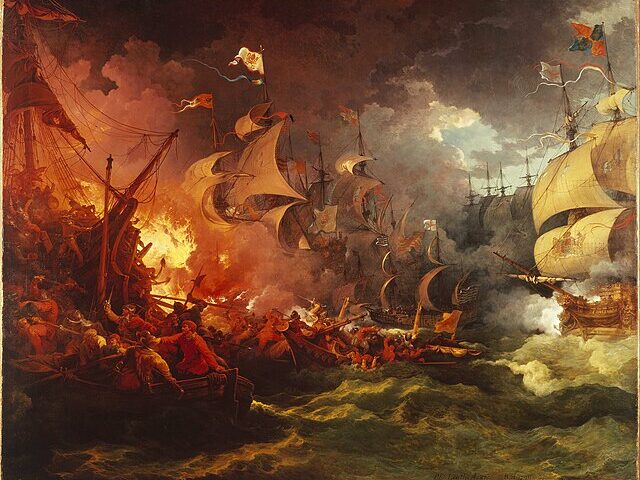
On April 30, 1492, Christopher Columbus, an ambitious navigator from Genoa, was named admiral of the ocean, viceroy, and governor of any territory he claimed for Spain. The move by the two Spanish monarchs, Ferdinand II of Aragon and Isabella I of Castile, launched…
Read MoreOn March 28, 1939, General Francisco Franco’s Nationalist forces entered Madrid, ending nearly three years of siege and signifying the final collapse of the Second Spanish Republic. This moment marked the end of the Spanish Civil War, a deeply polarizing conflict that had drawn…
Read MoreThe U.S. Supreme Court’s decision in United States v. The Amistad on March 9, 1841, was a pivotal moment in American legal history, addressing issues of slavery, international law, and human rights. The case involved a group of Africans who had been illegally enslaved,…
Read MoreOn the fateful day of March 4, 1519, the course of history forever changed when Hernán Cortés, the Spanish conquistador, anchored off the shores of Mexico. His arrival marked the beginning of a transformative and tumultuous chapter that would shape the destinies of Mesoamerica’s…
Read MoreChristopher Columbus’s first expedition made landfall in the Caribbean on October 12, 1492, a moment that would forever change the course of history. After weeks of sailing westward from Spain across the Atlantic Ocean, Columbus and his crew finally reached land, a small island…
Read More