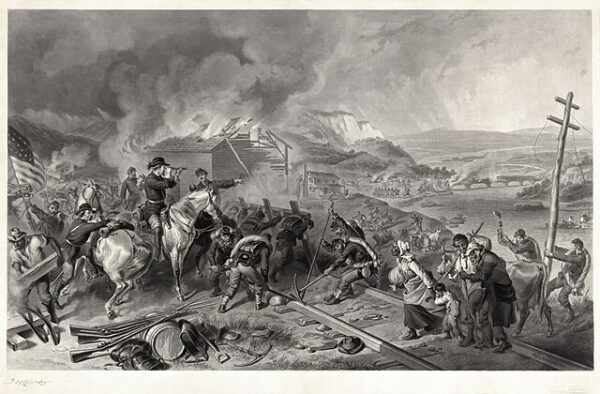
Sherman’s March to the Sea was a military campaign conducted by Union General William Tecumseh Sherman during the American Civil War. The campaign took place from November 15 to December 21, 1864, and it was a significant and controversial aspect of the Union’s strategy.…
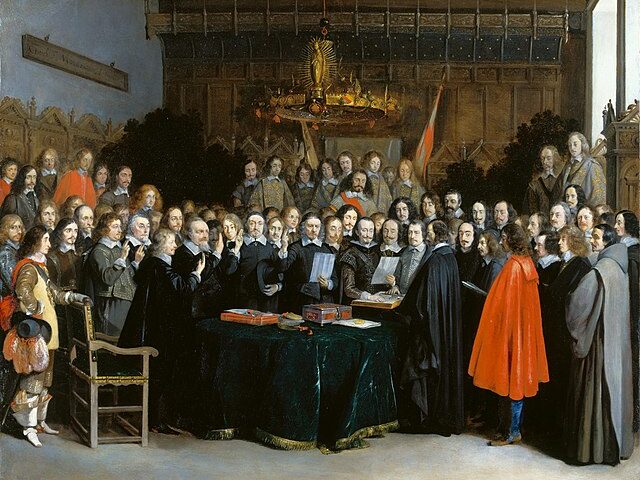
Read MoreThe signing of the Peace of Westphalia on October 24, 1648, marked one of the most transformative moments in European—and indeed world—history. Concluded in the German cities of Münster and Osnabrück after years of painstaking negotiation, the treaties ended two interconnected conflicts that had…
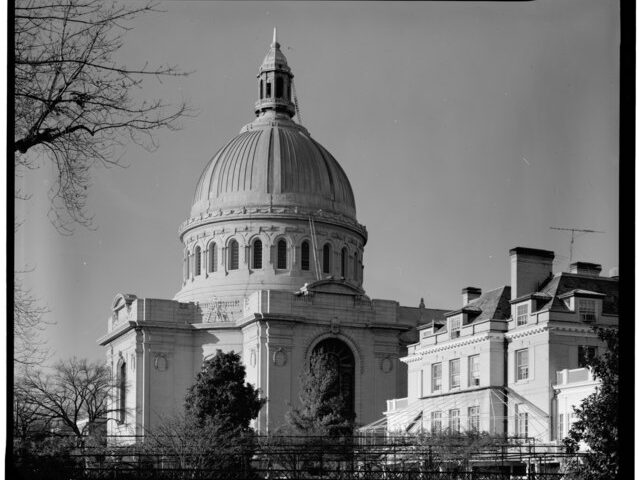
Read MoreOn October 10, 1845, the United States Naval School opened in Annapolis, Maryland, with 50 midshipmen students and seven professors. The curriculum included mathematics and navigation, gunnery and steam, chemistry, English, natural philosophy, and French. “When the founders of the United States Naval Academy…
Read MoreOn September 24, 1846, General Zachary Taylor successfully captured Monterrey during the Mexican-American War, marking a decisive victory for the United States in its campaign against Mexico. The capture of Monterrey was a turning point in the war, establishing Taylor’s military reputation and paving…
Read MoreOn August 28, 1879, British troops finally closed in on the fugitive monarch who had so recently commanded the fearsome Zulu army. King Cetshwayo kaMpande, last sovereign of an independent Zulu nation, was captured in the aftermath of one of the most brutal colonial…
Read MoreThe Geneva Convention is a series of international treaties and protocols that establish the standards for humanitarian treatment during war. The first of these conventions was adopted in 1864, and the most recent, the Fourth Geneva Convention, was adopted in 1949. These treaties play…
Read More