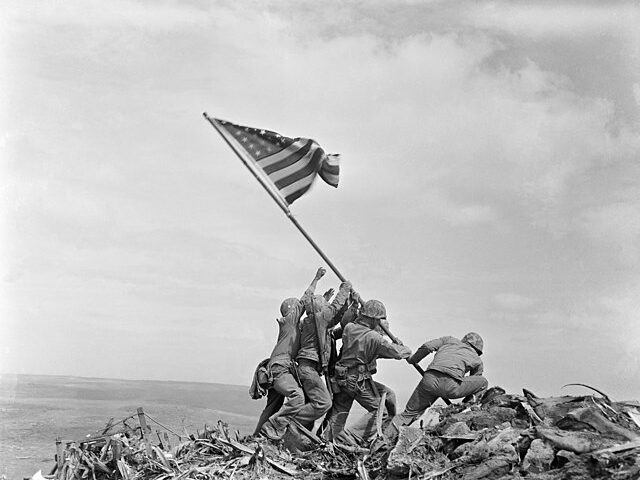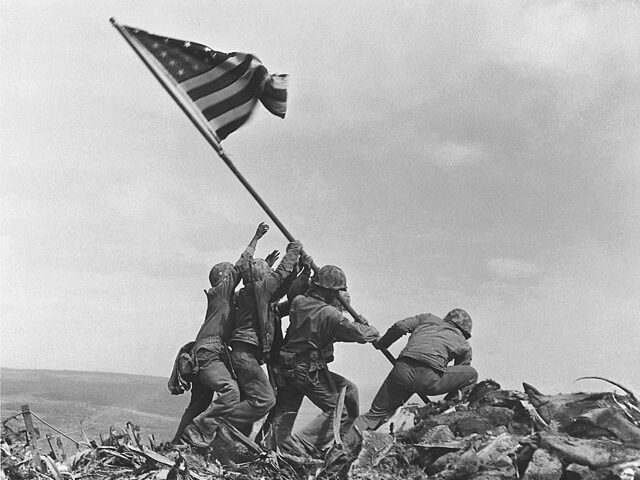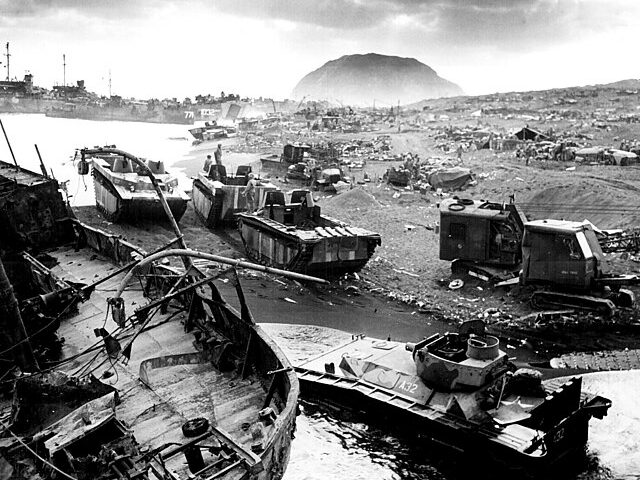
On February 19, 1945, after days of relentless naval and aerial bombardment, approximately 30,000 United States Marines stormed the black volcanic beaches of Iwo Jima, a small, sulfur-scented island in the western Pacific that would become one of the bloodiest battlefields in American military…
Read MoreOn February 17, 1944, U.S. forces launched a decisive assault on the Eniwetok Atoll in the Marshall Islands, marking another critical step in the Central Pacific drive toward Japan. The operation—part of a broader campaign following the capture of Kwajalein earlier that month—reflected the…
Read MoreThe Allied bombing of Dresden, culminating on February 15, 1945, remains one of the most debated military operations of World War II. Over four air raids between February 13 and 15, the British Royal Air Force and the United States Army Air Forces launched…
Read MoreOn February 9, 1942, the United States did something that would have seemed mildly absurd just a few years earlier: it reset the nation’s clocks—permanently, at least for the duration of the war. With the country barely two months removed from Pearl Harbor, Congress…
Read MoreOn February 9, 1943, the war in the Pacific finally turned. The Battle of Guadalcanal, a pivotal conflict in the Pacific theater of World War II, unfolded for nearly seven months before the Allies finally prevailed. It marked a turning point in the war…
Read MoreThe recapture of Manila, which began in earnest on February 3, 1945, marked the culmination of General Douglas MacArthur’s long-promised return to the Philippine capital—a vow famously declared upon his departure in 1942 and meticulously orchestrated over the intervening years. By February 5, the…
Read MoreOn January 31, 1943, the German military catastrophe at Stalingrad reached its irrevocable conclusion. That day, Friedrich Paulus, commander of Germany’s Sixth Army, surrendered the southern pocket of his trapped forces to the Soviet Red Army. Two days later, the remaining German units in…
Read MoreOn January 23, 1941, Charles Lindbergh, the renowned aviator celebrated for his groundbreaking 1927 solo transatlantic flight, delivered a controversial speech before the U.S. Congress. In his testimony, Lindbergh advocated for a neutrality pact with Nazi Germany, a stance that would polarize public opinion…
Read MoreOn January 14, 1943, in the midst of a global war whose outcome was anything but assured, Franklin D. Roosevelt and Winston Churchill opened what would become one of the most consequential Allied strategy meetings of World War II: the Casablanca Conference. Convened in…
Read MoreOn January 6, 1941, Congress heard one of the most iconic speeches in American history. Franklin Delano Roosevelt, the 32nd President of the United States, delivered what became known as the Four Freedoms Speech. This speech was part of his State of the Union…
Read More