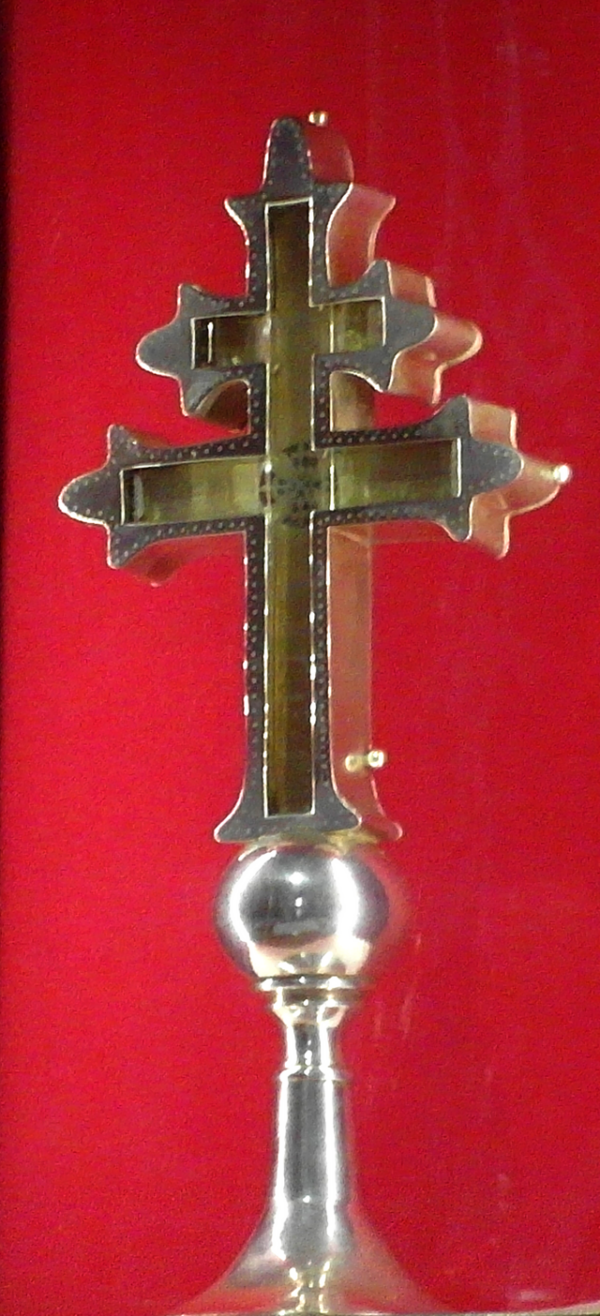
On March 21, 630, Emperor Heraclius entered Jerusalem not as a conqueror in triumph, but as a penitent bearing a burden—both literal and symbolic—that had come to define a generation of war. In his hands, according to Christian tradition, was the True Cross, the relic believed to be the very instrument of Christ’s crucifixion. Its return marked the end of one of the most devastating conflicts of late antiquity and, for a fleeting moment, the restoration of a Christian world that had seemed on the brink of collapse.
The story begins not in victory, but in catastrophe. In 614, the armies of the Sasanian Persian Empire, under King Khosrow II, stormed Jerusalem after years of grinding war against the Byzantine Empire. The city fell with shocking speed. Churches were burned, thousands of Christians were killed or enslaved, and the True Cross—housed in the Church of the Holy Sepulchre—was carried off to Persia as a prize of conquest. For the Christian world, the loss was not merely strategic; it was existential. Jerusalem was more than a city. The Cross was more than an artifact. Together, they represented the spiritual center of a civilization already under strain.
Heraclius inherited this crisis. When he came to power in 610, the Byzantine Empire was reeling—territories lost, coffers depleted, morale shattered. Persia seemed unstoppable. Yet over the next decade, Heraclius orchestrated one of the most improbable reversals in imperial history. Refusing to concede defeat, he reorganized the empire’s military, secured fragile alliances, and launched a daring counteroffensive deep into Persian territory.
The campaign was as much psychological as it was strategic. Heraclius cast the war in explicitly religious terms—a struggle not simply for land, but for the restoration of the Cross itself. In doing so, he reframed a faltering imperial defense as something closer to a holy mission. The message resonated. What followed was a series of hard-fought victories culminating in the decisive Byzantine triumph at the Battle of Nineveh in 627. The Persian war machine, long dominant, began to fracture.
By 628, internal upheaval in Persia had toppled Khosrow II. His successors, desperate to stabilize the empire, sought peace. Among the terms was the return of the relics taken from Jerusalem—including the True Cross. It was, in effect, an admission that the war had not only been lost, but that its symbolic stakes had been reversed.
And so, in 630, Heraclius made his way to Jerusalem.
The moment was staged with deliberate humility. Later accounts—some embellished, others grounded in earlier sources—describe the emperor approaching the city in imperial regalia, only to be halted at the gates. According to tradition, he was told that he could not enter in splendor while bearing the Cross of Christ, who had entered the city in meekness. Heraclius dismounted, removed his royal garments, and proceeded barefoot, carrying the relic into Jerusalem.
Whether apocryphal or not, the image endured because it captured something essential about the moment. This was not simply a military victory parade. It was a ritual of restoration. The Cross, once lost to a foreign power, was returned to its place at the heart of Christendom. The empire, battered but intact, had reclaimed not only territory, but meaning.

Yet the triumph would prove short-lived.
Even as Heraclius restored the Cross to Jerusalem, new forces were gathering to the south. Within a decade, Arab Muslim armies—unified under the banner of a new and rapidly expanding faith—would sweep through the very territories Heraclius had fought to reclaim. In 636, at the Battle of Yarmouk, Byzantine power in the Levant would collapse. By 638, Jerusalem itself would fall again, this time to Caliph Umar ibn al-Khattab.