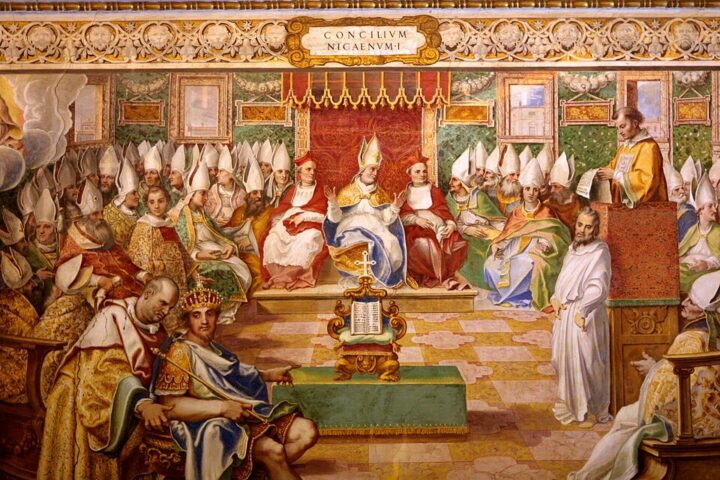
On May 20, 325, the First Council of Nicaea formally opened, marking one of the most consequential gatherings in the history of Christianity. Convened by the Roman emperor Constantine, the council brought together bishops from across the empire to settle a theological dispute that…
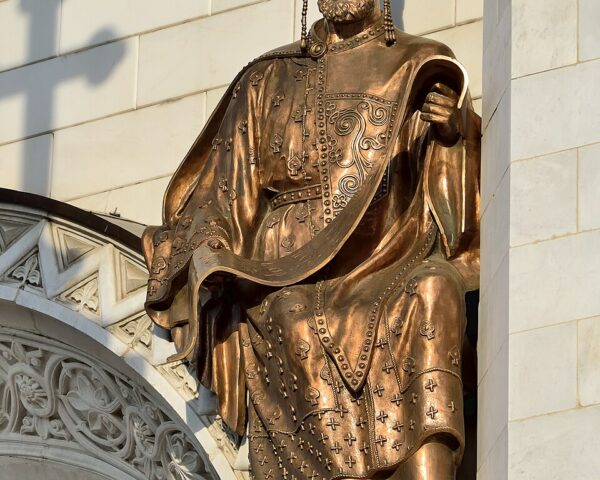
Read MoreOn May 11, 330, Constantine the Great marked one of the most consequential acts of urban and imperial reorientation in world history: the dedication of the rebuilt city of Byzantium as New Rome. The city would soon be known as Constantinople, and for more…
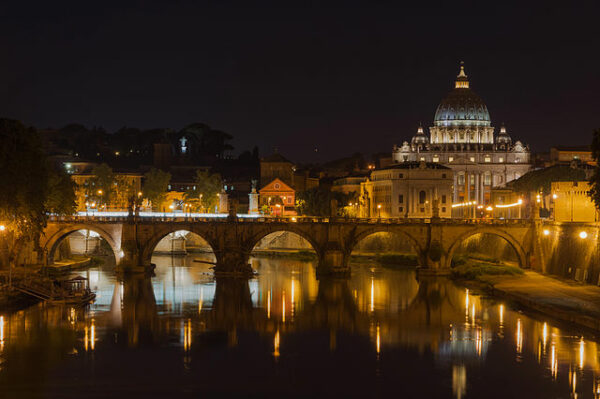
Read MoreOn April 18, 1506, under the direction of Pope Julius II, the cornerstone of what would become one of the most iconic churches in Christendom—St. Peter’s Basilica in Vatican City—was laid. The event marked not only the beginning of a monumental architectural project but…
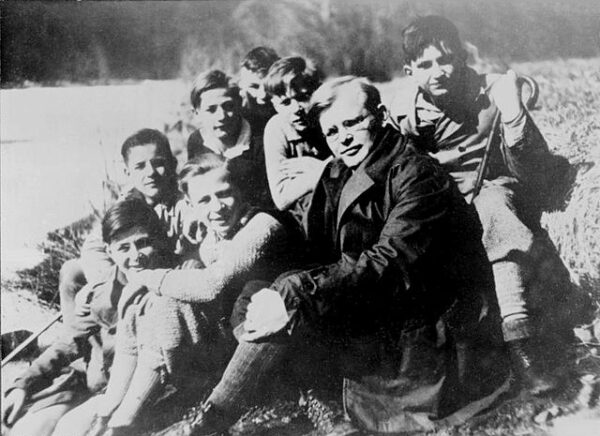
Read MoreOn April 9, 1945, just weeks before Nazi Germany collapsed, Lutheran pastor and theologian Dietrich Bonhoeffer was executed at Flossenbürg concentration camp. Bonhoeffer was a courageous and outspoken critic of Adolf Hitler, whose deep Christian faith drove him to resist the regime. Ordered by…
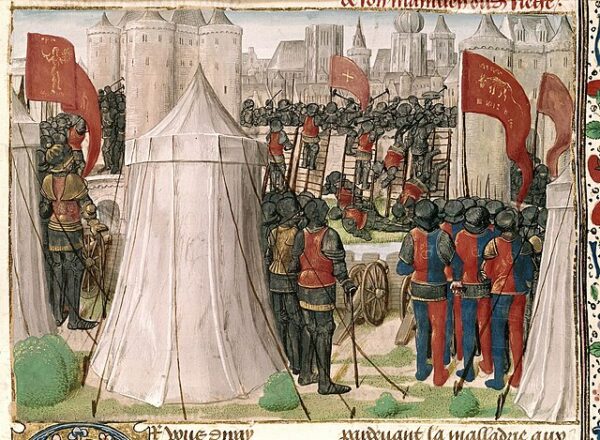
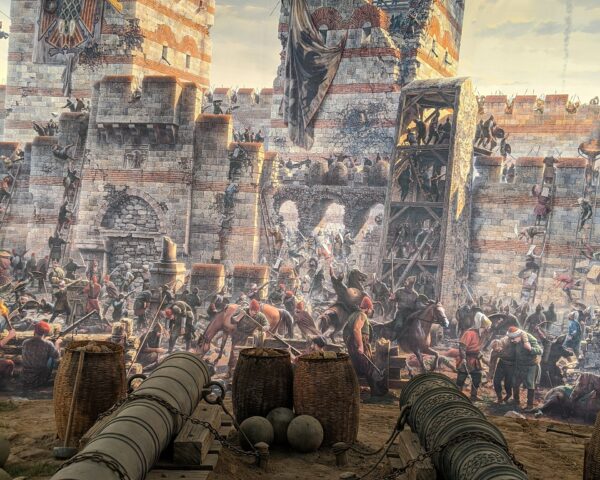
Read MoreWhen Sultan Mehmed II encamped outside the Theodosian Walls on April 6, 1453, beginning what would become the final siege of Constantinople, few could have anticipated that the confrontation would not merely end a millennium of Byzantine rule, but also inaugurate a new political…
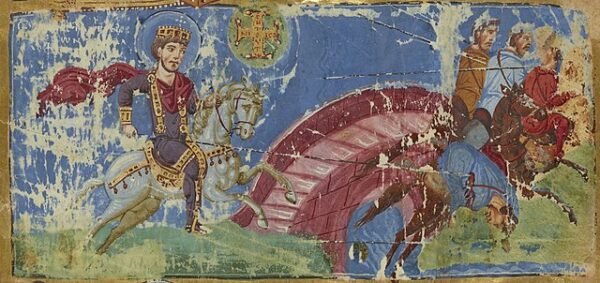
Read MoreOn March 21, 630, Emperor Heraclius entered Jerusalem not as a conqueror in triumph, but as a penitent bearing a burden—both literal and symbolic—that had come to define a generation of war. In his hands, according to Christian tradition, was the True Cross, the…
Read MoreOn February 23, 1455, the world of reading, and religion, changed forever when Johannes Gutenberg printed his first book–the Bible. This seminal work marked the advent of movable-type printing in Europe, revolutionizing the dissemination of knowledge and laying the foundation for the modern book…
Read MoreThe morning of October 29, 312, dawned over a city poised between dread and deliverance. Two days earlier, on the banks of the Tiber just north of Rome, the armies of Constantine and Maxentius had met in a climactic struggle that would reshape the…
Read MoreOn October 23, 4004 BC, at least according to the calculations of Archbishop James Ussher, the world was created. This date, derived from a meticulous study of the Bible and historical records, represents Ussher’s attempt to establish a timeline for the creation of the…
Read MoreOn September 14, 1741, George Frideric Handel completed one of the most celebrated pieces of music in history: the oratorio Messiah. This monumental work, which has become a cornerstone of Western choral literature, was composed in a remarkably short span of just 24 days.…
Read More