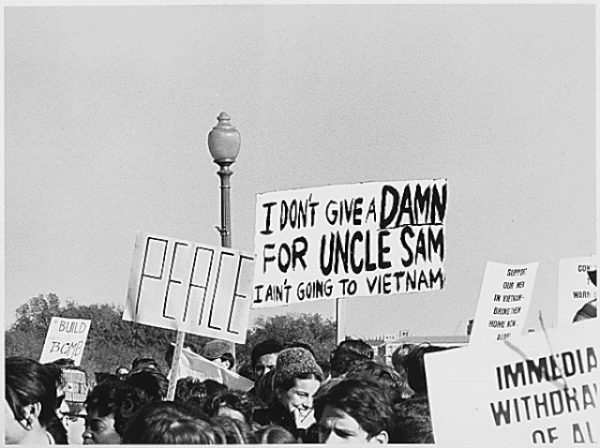
On April 23, 1968, the campus of Columbia University became one of the most visible flashpoints of domestic unrest during the Vietnam War, as student protesters seized control of multiple administration buildings and effectively shut down the university.
The occupation did not erupt spontaneously; it was the culmination of weeks of mounting tension over two central grievances. First, students objected to Columbia’s institutional ties to the Institute for Defense Analyses (IDA), a think tank conducting research connected to U.S. military operations in Vietnam. Second, they opposed the university’s plan to construct a new gymnasium in Morningside Park—adjacent to Harlem—which critics argued would segregate access and displace local residents.
Leading the protests were members of the Students for a Democratic Society (SDS) and the Student Afro-American Society (SAS), an alliance that reflected both the antiwar movement and the rising urgency of civil rights activism. Though united in initial purpose, the two groups would later diverge in tactics and goals, particularly as the occupation unfolded.
On April 23, demonstrators began by rallying on campus before marching toward key administrative sites. Tensions escalated rapidly. Students pushed past campus security, storming buildings and establishing control over several structures, including Hamilton Hall, Low Library, and others central to university governance. Barricades were erected using furniture, and doors were chained shut. Within hours, Columbia’s normal operations had ceased.
Inside the occupied buildings, the atmosphere varied. Some protesters treated the space as a political commune—holding debates, organizing food distribution, and drafting demands—while others prepared for confrontation. Faculty members attempted mediation, and negotiations with university officials proceeded intermittently but without resolution. The occupation hardened positions on all sides.
A critical turning point came when SAS members took exclusive control of Hamilton Hall, asking white SDS members to leave. This separation underscored tensions between the broader antiwar movement and Black student activists, who prioritized the Harlem gym issue and autonomy in decision-making. Despite this split, both groups maintained pressure on the administration.
University President Grayson L. Kirk initially resisted calling in police, hoping to resolve the crisis internally. But as the occupation stretched into its second week and concerns mounted over safety, property damage, and the university’s ability to function, the administration reconsidered. Alumni, trustees, and city officials increasingly demanded decisive action.
In the early hours of April 30, at the request of Columbia’s leadership, the New York Police Department moved onto campus in force. Hundreds of officers entered the occupied buildings, forcibly removing protesters. The operation resulted in more than 700 arrests and numerous injuries, including students, faculty, and police officers. Images of helmeted officers dragging students down staircases and across campus circulated widely, intensifying national debate over the limits of protest and the use of state power.
The immediate aftermath was chaotic. Classes were suspended, the campus remained tense, and Columbia’s reputation suffered. Yet the protests also forced tangible changes. The university soon severed its ties with the IDA and halted the controversial gym project. In that sense, the demonstrators achieved key objectives, though at significant cost.

More broadly, the Columbia protests became emblematic of a transformative moment in American higher education and political culture. They revealed the extent to which universities had become battlegrounds over the Vietnam War, civil rights, and the role of institutions in public life. Similar protests would soon erupt at campuses across the country, from Berkeley to Harvard, amplifying a nationwide student movement.
The events of April 1968 also exposed deeper fractures—between students and administrators, between activists themselves, and between generations divided over war and authority. What began as a campus dispute evolved into a national spectacle, reflecting a society under strain.
In retrospect, the Columbia occupation stands as one of the defining episodes of 1960s student activism: a moment when protest moved from demonstration to direct action, when universities could no longer remain insulated from the political upheavals reshaping the United States.