
On May 29, 363, Roman Emperor Julian the Apostate achieved one of the most impressive battlefield victories of late antiquity when his army defeated the forces of the Sasanian Empire outside the walls of Ctesiphon, the Persian capital. Yet the triumph would quickly turn into one of history’s most consequential strategic failures. Although Julian won the battle, he could not capture the city, and the campaign’s collapse reshaped the balance of power between Rome and Persia for generations.
Julian, who ruled from 361 to 363, had embarked on an ambitious invasion of Persia with a force estimated at more than 60,000 men. His objective was nothing less than the decisive defeat of Rome’s greatest eastern rival. For centuries, the Roman and Persian empires had competed for dominance across the Near East, fighting repeated wars over territory, trade routes, and political influence.
The campaign reflected Julian’s broader ambitions. A skilled military commander and intellectual, he hoped to emulate the conquests of Alexander the Great and secure lasting military glory. He also sought to strengthen his position at home by delivering a dramatic victory that would rival the achievements of earlier Roman emperors.
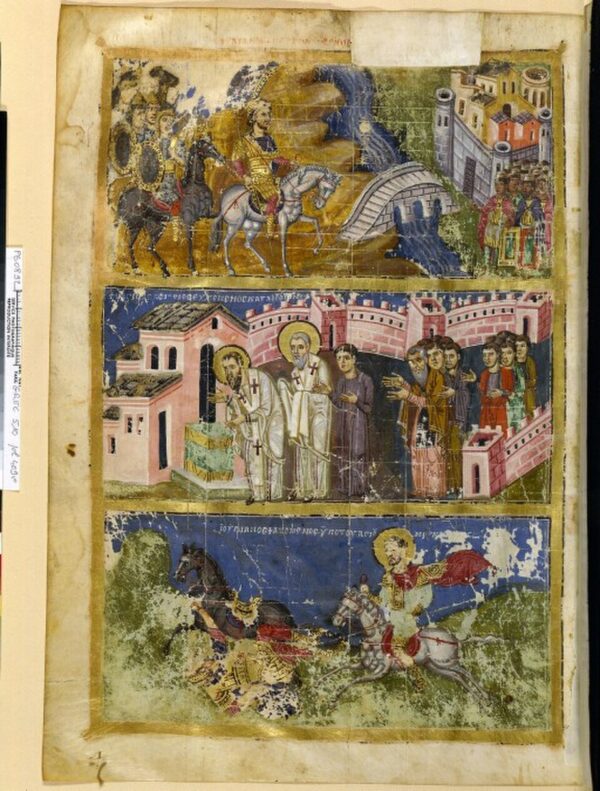
Marching deep into Mesopotamia, Julian advanced rapidly down the Euphrates River. Roman forces captured several fortified positions and defeated Persian detachments along the way. By late May, they arrived outside Ctesiphon, a sprawling metropolis located near modern-day Baghdad.
The Sasanians, led by forces loyal to King Shapur II, attempted to block the Roman advance. On May 29, Roman troops crossed difficult terrain and attacked Persian forces positioned near the city. Ancient accounts describe fierce fighting as heavily armored Persian cavalry and infantry clashed with Roman legions.
The Romans ultimately prevailed. Julian personally directed portions of the battle, and his troops drove the Persian defenders from the field. Casualties among the Romans were relatively light compared with those suffered by their opponents. The victory demonstrated that Roman military discipline and battlefield tactics remained formidable even after decades of political instability and frontier pressures.
Yet the success exposed a critical problem. Defeating an army was not the same as capturing a fortified capital.
Ctesiphon possessed massive defensive walls and strong garrisons. Julian lacked the heavy siege equipment necessary for a prolonged assault. At the same time, the Persian strategy of scorched-earth resistance was beginning to take effect. Local food supplies had been destroyed or removed, making it increasingly difficult for the Roman army to sustain itself deep in enemy territory.
Faced with mounting logistical challenges, Julian convened a council of war. Rather than attempt a risky siege, he decided to continue inland in hopes of forcing a decisive confrontation with Shapur’s main army. The decision proved disastrous.
As the Romans moved farther from their supply lines, Persian forces harassed them continuously. Food shortages worsened, morale declined, and the army found itself trapped in hostile territory. Less than a month after the victory at Ctesiphon, Julian was mortally wounded during a skirmish on June 26, 363. His death plunged the expedition into crisis.
The new emperor, Jovian, inherited an army on the verge of destruction. To secure its survival, he negotiated a peace treaty that ceded significant territories and frontier fortresses to Persia. The agreement represented one of the most substantial diplomatic setbacks Rome had suffered in centuries.

The Battle of Ctesiphon thus became a classic example of the difference between tactical victory and strategic success. Julian won the battlefield but lost the campaign. His inability to seize the Persian capital prevented him from converting military success into a lasting political result.
The consequences extended far beyond 363. The treaty that followed strengthened the Sasanian Empire and altered the strategic balance in the Near East. Rome abandoned important defensive positions, while Persia gained greater influence over neighboring regions. Historians have often viewed the failed campaign as the last major Roman attempt to conquer Persia outright.
Julian’s victory outside Ctesiphon remains one of antiquity’s great military paradoxes. It showcased Roman courage, leadership, and battlefield effectiveness, yet it also revealed the limits of military power when unsupported by logistics, supplies, and achievable strategic objectives. In the end, the emperor won the battle beneath the walls of Ctesiphon, but history remembered the campaign as a costly turning point that helped define the future relationship between two of the ancient world’s greatest empires.