
On January 31, 1943, the German military catastrophe at Stalingrad reached its irrevocable conclusion. That day, Friedrich Paulus, commander of Germany’s Sixth Army, surrendered the southern pocket of his trapped forces to the Soviet Red Army. Two days later, the remaining German units in the city followed suit. The collapse ended the Battle of Stalingrad, the deadliest single battle in human history and the decisive turning point of World War II in Europe.
The road to surrender had been paved months earlier. In the summer of 1942, Adolf Hitler launched Operation Blue, a renewed eastern offensive aimed at seizing the oil fields of the Caucasus and severing Soviet industrial capacity along the Volga River. Stalingrad—an industrial hub bearing the name of Soviet leader Joseph Stalin—was initially a secondary objective. But its symbolic value soon transformed it into an obsession. What began as a campaign for resources became a battle for prestige, ideology, and personal authority.
By August 1942, German forces had reached the city. Luftwaffe bombing reduced much of Stalingrad to rubble, yet the destruction worked against the attackers. The ruined city became ideal terrain for Soviet defenders, who waged a brutal close-quarters struggle the Germans grimly nicknamed Rattenkrieg—rat war. Factory floors, apartment stairwells, and sewer tunnels became front lines. Gains were measured in meters and paid for with thousands of lives.
Despite horrific losses, Soviet forces held narrow strips of land along the Volga’s western bank. Then, in November 1942, the Red Army launched Operation Uranus, a massive counteroffensive targeting the weaker Axis flanks manned by Romanian, Italian, and Hungarian troops. The maneuver succeeded with stunning speed. Within days, Soviet pincers closed around Stalingrad, encircling more than 250,000 German and allied soldiers inside the city.
Hitler forbade retreat. He promised that the Sixth Army would be resupplied by air—a logistical fantasy that collapsed under winter weather, Soviet anti-aircraft fire, and inadequate transport capacity. As temperatures plunged to −30°F, starvation, frostbite, and disease ravaged the trapped force. Ammunition dwindled. Horses were slaughtered for food. Wounded soldiers froze to death in unheated ruins.
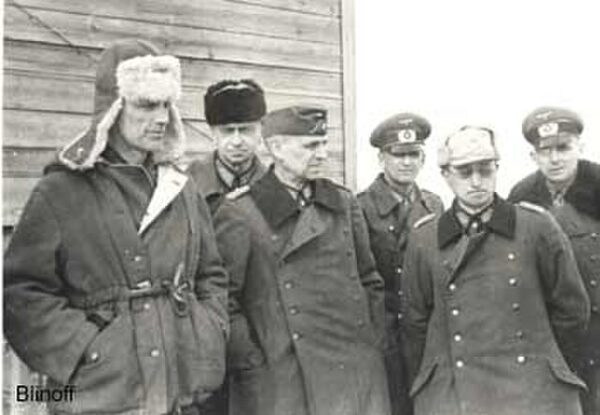
In a final act of political theater, Hitler promoted Paulus to field marshal on January 30, 1943. No German field marshal had ever surrendered, and the message was unmistakable: Paulus was expected to die. Instead, recognizing the hopelessness of his position and unwilling to sacrifice his remaining men in a pointless last stand, Paulus capitulated the following day.

On January 31, Soviet troops entered Paulus’s headquarters in the basement of a destroyed department store. The southern pocket surrendered. The northern group held out until February 2, when organized resistance finally ended. Of the original Sixth Army, roughly 90,000 soldiers were taken prisoner. Fewer than 6,000 would ever return to Germany.
The consequences were seismic. Stalingrad shattered the myth of German invincibility and delivered an irreparable psychological blow to the Third Reich. It marked the first complete destruction of a German field army and forced Nazi Germany permanently onto the defensive on the Eastern Front. For the Soviet Union, the victory validated immense sacrifices and signaled that ultimate victory—though still distant—was possible