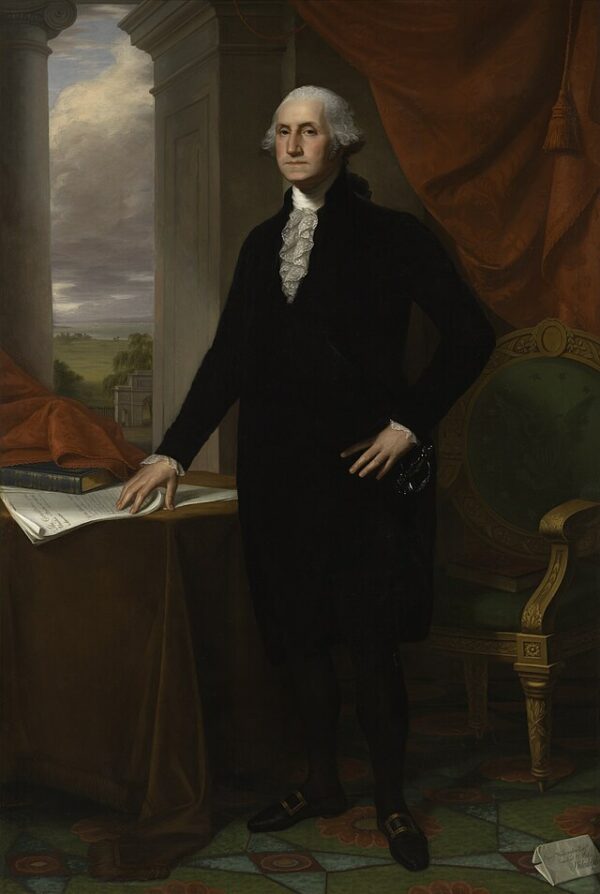
On March 15, 1783, in a small meeting hall in Newburgh, New York, General George Washington delivered one of the most consequential speeches in American history. With the Revolutionary War effectively won but the new nation still fragile, Washington confronted a crisis that threatened to destroy the republic before it even began: a potential military revolt against Congress known as the Newburgh Conspiracy.
The Continental Army had spent years fighting under brutal conditions. Soldiers endured shortages of food, clothing, and pay, while many officers had long gone without the salaries and pensions Congress had promised them. By early 1783, frustration had reached a boiling point. Rumors circulated through the officer corps that Congress might never honor its commitments. Some officers believed the only way to secure justice was through collective pressure — perhaps even force.
Anonymous letters began circulating among the officers stationed at Newburgh, the army’s winter encampment overlooking the Hudson River. The letters called for a meeting and hinted at drastic action if Congress continued to ignore the army’s grievances. One message warned that if peace came and soldiers were simply sent home unpaid, the army might refuse to disband. Others suggested marching on Congress itself.
To many observers, the situation carried the unmistakable scent of a military coup. The American Revolution had been fought in the name of liberty and civilian government, yet here was the possibility that the very army created to secure independence might overthrow the authority of the civilian Congress.
Washington understood the danger immediately.
The commander in chief had long sympathized with his officers’ grievances. He had repeatedly written to Congress warning that failure to compensate the army properly could lead to disaster. But Washington also knew that if the army turned against civilian authority, the republican experiment would collapse. The United States might follow the path of so many revolutions before it — trading one form of tyranny for another.
When the officers gathered on March 15 to discuss the crisis, Washington arrived unexpectedly. Many present suspected he might support their demands for stronger action. Instead, he offered a solemn appeal for restraint and loyalty to the principles they had fought to defend.
Washington acknowledged the suffering of the army and assured the officers that their grievances were legitimate. But he warned them against rash actions that would stain the honor of the revolution. He urged them to trust Congress and to remember the ideals that had guided the struggle for independence.
Then came the moment that would define the speech.
Near the end of his remarks, Washington reached into his pocket and pulled out a letter from a member of Congress. As he prepared to read it, he paused and struggled with the text. Removing a pair of spectacles — something many of his officers had never seen him wear — he addressed the room with quiet humility.
“Gentlemen, you must pardon me,” Washington said. “I have grown gray in your service and now find myself growing blind.”
The simple statement stunned the audience. For years the officers had known Washington as a commanding figure — disciplined, composed, almost larger than life. In that moment they saw instead a weary man who had sacrificed alongside them throughout the war.

The effect was immediate. The anger that had fueled talk of revolt began to dissipate. Many officers were visibly moved. The meeting ended without any endorsement of the anonymous letters, and the idea of military resistance to Congress quickly collapsed.
The Newburgh Conspiracy faded as suddenly as it had appeared. Within months, the war formally ended with the Treaty of Paris, and the Continental Army began to disband peacefully.
Washington’s intervention at Newburgh became a defining moment in the early republic. By persuading the army to submit to civilian authority, he helped establish a precedent that would shape American political culture for generations: the military serves the nation, but it does not rule it.
He was the “Indispensable Man” and that’s why Washington chose a different path. His emotional appeal in that Newburgh meeting hall helped ensure that the American Revolution ended not with a coup, but with the birth of a republic grounded in civilian government and constitutional restraint.