
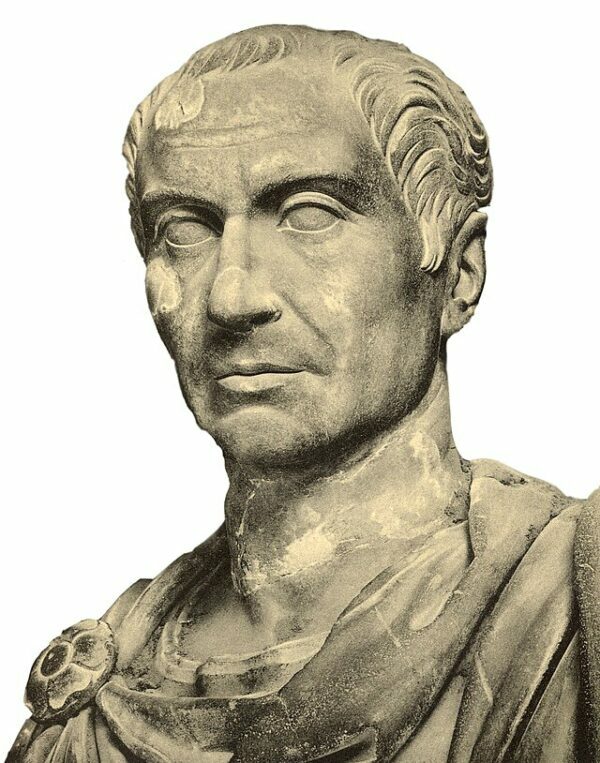
On April 6, 46 BC, Julius Caesar delivered a decisive blow to the last organized resistance of the Roman Republic at the Battle of Thapsus, defeating forces led by Quintus Caecilius Metellus Scipio and supported by allies of Marcus Porcius Cato the Younger. The engagement, fought near the North African coast in what is now Tunisia, marked a turning point in the civil war and accelerated the collapse of republican opposition to Caesar’s rule.
The battle came in the aftermath of Caesar’s earlier victory over Gnaeus Pompeius Magnus at Pharsalus in 48 BC. Although Pompey was later killed in Egypt, his supporters regrouped in North Africa, where they established a stronghold with the backing of Juba I of Numidia. From there, they assembled an army intended to challenge Caesar’s authority and preserve the traditional republican system.
Caesar moved quickly to confront them. Despite supply difficulties and the strain of prolonged campaigning, he brought his veteran legions into position near Thapsus, where Scipio’s forces had taken up a defensive line. The Pompeian army held a numerical advantage and deployed war elephants along its front—an uncommon and potentially decisive weapon meant to disrupt Caesar’s infantry.
The terrain narrowed the engagement. With the sea on one side and marshland on the other, both armies were funneled into a confined space that limited maneuver and forced a direct clash. Scipio appeared prepared to hold his ground. Caesar chose to attack.
When fighting began, the elephants were expected to play a central role. Instead, they became a liability. Caesar’s troops, anticipating their use, responded with coordinated noise, missile fire, and disciplined formations that unsettled the animals. The elephants panicked, turning back into their own lines and causing confusion among the Pompeian ranks.
Caesar’s legions pressed the advantage. Advancing in formation, they broke through weakened sections of the enemy line and drove into the center. The Pompeian position unraveled quickly. What had begun as a structured engagement devolved into a rout, with large numbers of Scipio’s troops killed as resistance collapsed.
The aftermath underscored the scale of the defeat. Scipio fled but ultimately took his own life. Juba met a similar end soon after. Cato the Younger, stationed at Utica and not present on the battlefield, chose suicide rather than submit to Caesar. His death would later be interpreted as a final act of loyalty to the republican cause.
The loss at Thapsus effectively ended organized resistance in North Africa. While some opposition forces continued to fight, including a final stand in Hispania that would culminate at Munda in 45 BC, the outcome at Thapsus removed the leadership and cohesion that had sustained the republican effort.

For Caesar, the victory solidified his position. He returned to Rome with no comparable military opposition remaining and was soon granted expanded powers, including a long-term dictatorship. The political balance that had defined the Republic for centuries had shifted decisively.
The battle itself was not the largest of Caesar’s campaigns, but its consequences were far-reaching. By eliminating the last major republican army and its leadership, Thapsus cleared the path for a new political order centered on Caesar’s authority.
In practical terms, the Republic still existed after 46 BC. Its institutions remained in place, and its forms were preserved. But the outcome at Thapsus demonstrated that real power had moved elsewhere. The civil war, once a contest between competing visions of Roman governance, had become a consolidation of control under a single figure.