
In the early hours of April 28, 1944, a training exercise off the southern coast of England turned into one of the deadliest friendly-fire-adjacent disasters of World War II, exposing vulnerabilities that would be quietly corrected before the Allied invasion of Normandy just weeks later.
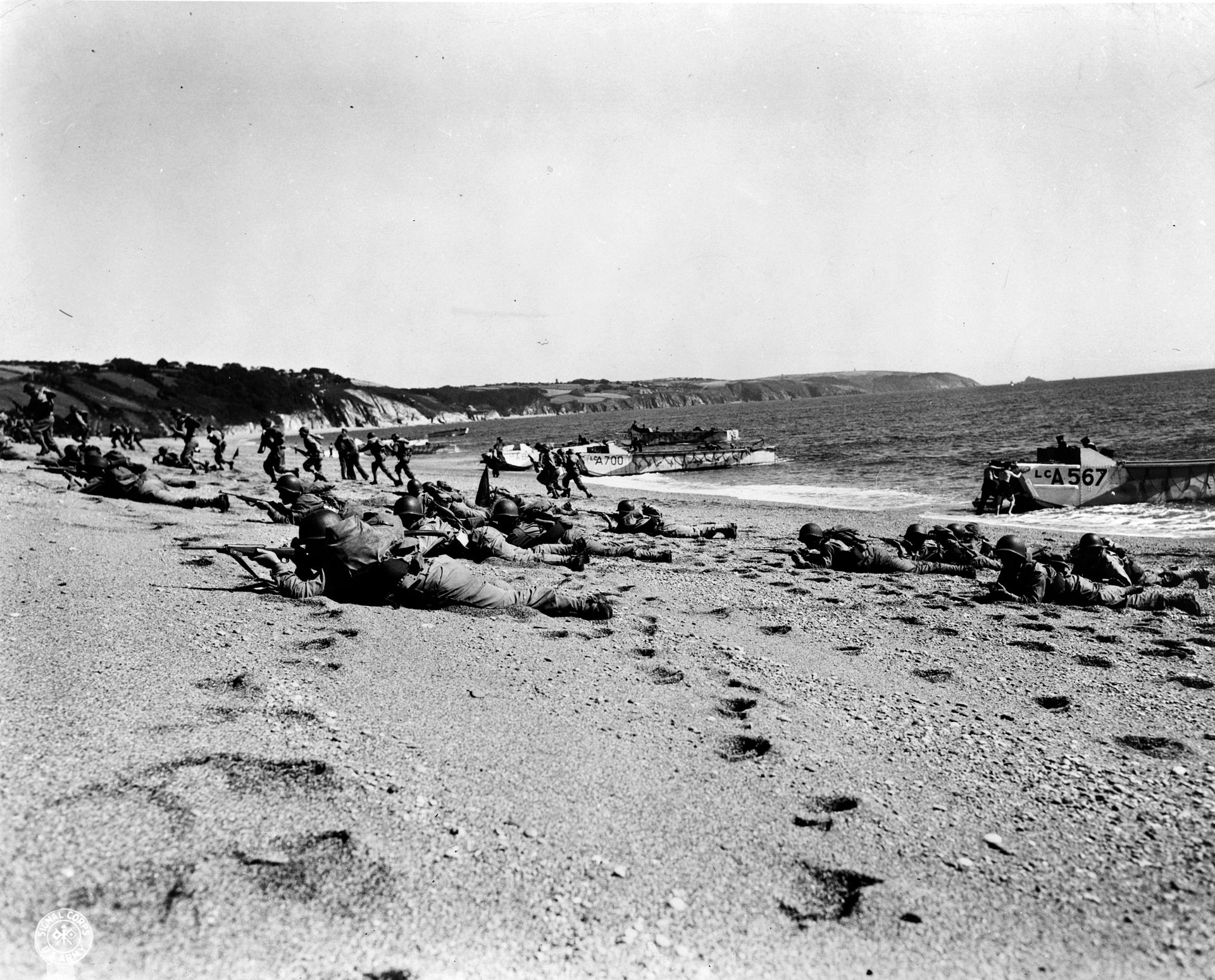
The operation, known as Exercise Tiger, was a large-scale rehearsal for the upcoming D-Day landings. Conducted at Slapton Sands in Devon—chosen for its resemblance to Utah Beach in Nazi-occupied France—the exercise involved thousands of American troops from the U.S. Army’s 4th Infantry Division, along with British naval units tasked with coordinating the amphibious assault. The goal was to simulate, as closely as possible, the conditions of the invasion, including live-fire exercises and nighttime maneuvers.
What unfolded instead was chaos.
A convoy of eight American landing ship tanks (LSTs), designated Convoy T-4, was moving through Lyme Bay under the cover of darkness. The vessels were heavily loaded with troops, vehicles, and supplies. Communication errors and incomplete coordination between British and American forces had already created gaps in the convoy’s protection. Critically, one of the assigned British escort ships was absent, and another had departed early after sustaining minor damage, leaving the slow-moving LSTs dangerously exposed.
Unbeknownst to the Allied forces, a group of German Schnellboote—fast attack craft known to the Allies as E-boats—had detected the convoy. Operating out of Cherbourg, the German vessels were designed for speed and surprise, equipped with torpedoes capable of devastating larger ships. Seizing the opportunity, nine E-boats moved into position.
Shortly after 2 a.m., they struck.
The attack was swift and devastating. Torpedoes slammed into several of the LSTs, igniting fires and triggering explosions. LST-507 and LST-531 were hit and quickly sunk, while LST-289 was heavily damaged but managed to stay afloat. The suddenness of the assault left many American soldiers unprepared. Some had been ordered to keep their life jackets improperly fastened, leading to fatal consequences when they jumped into the frigid water. Others struggled to escape the burning vessels or were trapped below decks.
Rescue efforts were hampered by confusion and delays. Because the exercise was conducted under strict secrecy, initial distress signals were misunderstood or not immediately acted upon. The lack of a unified radio frequency between British and American forces compounded the problem, slowing coordination at a moment when minutes meant the difference between life and death.
By the time the attack ended, 946 American servicemen were dead—killed either in the explosions, trapped aboard sinking ships, or drowned in the cold waters of Lyme Bay. It was a staggering loss, rivaling the casualties that would later be suffered on Utah Beach during the actual D-Day landings.
Yet the tragedy was not immediately made public.
Allied commanders, including General Dwight D. Eisenhower, ordered a near-total blackout on information related to the incident. The secrecy was driven by operational necessity: Exercise Tiger was a direct rehearsal for Operation Overlord, and any disclosure could have revealed critical details to German intelligence. Survivors were sworn to silence, and reports were tightly controlled.

Despite the suppression, the incident prompted urgent internal reviews. Investigators identified several key failures: inadequate naval escort, poor communication protocols, and insufficient training on emergency procedures. In response, Allied forces implemented changes before D-Day, including standardized radio frequencies, improved coordination between services, and stricter requirements for life jacket use.
These reforms would prove consequential. When Allied forces landed in Normandy on June 6, 1944, the lessons of Exercise Tiger—paid for in blood weeks earlier—contributed to a more cohesive and resilient operation.
For decades, the disaster remained relatively obscure, overshadowed by the success of D-Day itself. Only years later did fuller accounts emerge, shedding light on the scale of the loss and the circumstances that led to it.