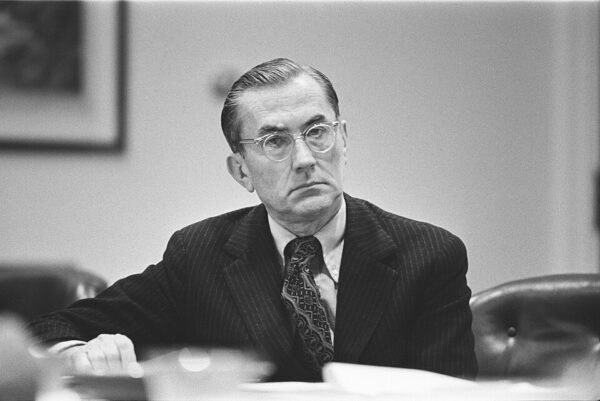
In the spring of 1996, the disappearance and death of former CIA Director William Colby carried the eerie quality of a Cold War epilogue, the final act in the life of a man who had spent decades moving through the hidden architecture of American power. When his body was discovered along a muddy riverbank in southern Maryland on May 6, eight days after he vanished during an evening canoe trip, the event immediately transcended the boundaries of an ordinary drowning investigation. Colby was not simply a retired public official. He was one of the central figures in the transformation of the modern American intelligence state, a man who had overseen covert wars abroad while later helping expose the CIA’s own institutional excesses at home. Even in death, he seemed incapable of escaping the atmosphere of secrecy that had defined his career.
Authorities found Colby’s body near the Wicomico River, not far from his waterfront home in Rock Point, Maryland. His overturned canoe had already been recovered days earlier, floating empty in the water after a massive search operation involving helicopters, divers, and Coast Guard crews. Inside the house, investigators encountered a scene that only deepened public fascination. His dinner remained unfinished. The television was still on. Personal belongings appeared undisturbed. To many observers, the details felt less like the accidental death of an elderly retiree than the opening sequence of a political thriller.
The reaction reflected the peculiar position Colby occupied in American history. By the time of his death, he had become both a respected statesman of the intelligence world and, in some corners, a deeply divisive figure. Born in St. Paul, Minnesota, Colby joined the Office of Strategic Services during World War II, parachuting into occupied Europe as part of America’s early covert operations apparatus. He later rose through the CIA during the height of the Cold War, serving in Italy, Southeast Asia, and Vietnam before ultimately becoming director of central intelligence in 1973 amid the institutional collapse of the Nixon era.
His tenure at the CIA coincided with one of the most dangerous legitimacy crises in the agency’s history. Watergate had shattered public trust in government, while congressional investigations began uncovering decades of covert operations, assassination plots, domestic surveillance, and other abuses carried out under the banner of anti-communism. Many inside the intelligence community expected Colby to resist disclosure and shield the agency from scrutiny. Instead, he pursued a strategy that amounted to controlled institutional confession. He cooperated extensively with Congress, turning over internal documents and testifying about programs the CIA had spent years denying even existed.
To supporters, Colby represented a rare example of an intelligence official who understood that democratic systems could not permanently sustain secret institutions operating without oversight. To critics inside the agency, however, his cooperation bordered on betrayal. Some officers never forgave him for exposing covert programs and subjecting the CIA to public humiliation during the Church Committee era of the mid-1970s. That lingering resentment became part of the mythology surrounding his death decades later.
When Colby disappeared on April 27, speculation spread almost immediately. Conspiracy theories flourished across newspapers, television programs, and intelligence circles. Some suggested foreign actors or former adversaries had targeted him. Others believed he knew too much about classified operations stretching back to Vietnam and the Cold War. The image of a former CIA director vanishing alone into dark water proved almost irresistible to a culture already conditioned to distrust official explanations surrounding intelligence agencies.

Yet the actual evidence pointed toward something far more mundane, if no less tragic. Medical investigators later concluded that Colby likely suffered a stroke or heart attack while canoeing. Severe arterial disease, combined with the cold water and isolation of the river, likely caused him to fall from the canoe and drown before help could arrive. His death was ultimately ruled accidental.
Still, the fascination endured because Colby’s life itself embodied a deeper contradiction within modern American government. He spent much of his career constructing and managing secret systems of power, only to later insist those same systems required constitutional restraint and public accountability. In that sense, the enduring mystery surrounding his death reflected something larger than the circumstances of one canoe accident. It reflected the enduring tension between secrecy and democracy that defined the Cold War generation Colby helped shape.