On May 12, 1593, London playwright Thomas Kyd was arrested in one of the most revealing episodes of Elizabethan literary history, a case that exposed the dangerous overlap between theater, politics, religion, and state surveillance in late Tudor England.
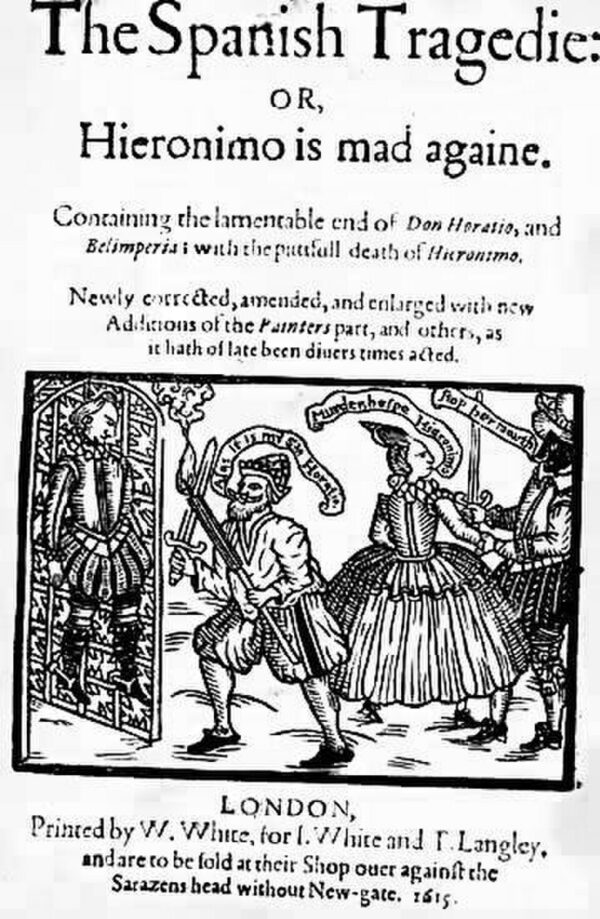
Kyd was already an important figure on the London stage. Though far less famous today than William Shakespeare or Christopher Marlowe, he helped shape the revenge tragedy, one of the defining dramatic forms of the Elizabethan theater. His best-known play, The Spanish Tragedy, became one of the era’s most influential works, filled with murder, madness, delay, spectacle, and revenge. Its impact can be seen in the theatrical world that produced Hamlet and the darker tragedies of the next generation.
But in 1593, Kyd’s literary importance offered him little protection. London was tense, suspicious, and politically volatile. The city’s theaters had been disrupted by plague. Religious anxieties remained high. The Elizabethan government, facing threats from Catholic powers abroad and dissent at home, closely monitored speech that seemed seditious, heretical, or socially inflammatory.
The immediate cause of Kyd’s arrest was a set of inflammatory writings known as the “Dutch Church libel.” These anti-immigrant posters had appeared in London and threatened Protestant refugees from France and the Netherlands. One of them was written in verse and alluded to Christopher Marlowe’s plays, including Tamburlaine. On May 11, the Privy Council ordered the arrest of those responsible for the “lewd and mutinous libels.” The following day, Kyd was arrested.
When officials searched Kyd’s lodgings, they apparently did not find evidence tying him directly to the libels. Instead, they found religious writings that authorities considered heretical. The papers were described as containing “vile heretical conceits” denying the divinity of Jesus Christ. In Elizabethan England, such material was not merely a private theological error. It could be treated as evidence of atheism, sedition, and hostility to the religious settlement that undergirded the state.
Kyd was imprisoned and tortured. Under pressure, he told authorities that the suspicious papers belonged not to him but to Christopher Marlowe, his former roommate and fellow playwright. Kyd claimed the documents had become mixed with his own papers when he and Marlowe had shared a chamber several years earlier. He then accused Marlowe of holding blasphemous and dangerous opinions.
The accusation helped draw Marlowe into the machinery of state suspicion. A warrant for Marlowe’s arrest was issued on May 18. He appeared before the authorities on May 20 and was ordered to remain available to the Privy Council. Ten days later, on May 30, Marlowe was stabbed to death in Deptford under circumstances that have remained the subject of speculation for centuries.

For Kyd, the consequences were devastating. Though he was eventually released, his career never recovered. He lost the favor of the aristocratic patron he had served for years and appears to have died in poverty in 1594, only about a year after his arrest. The experience left him broken physically, professionally, and socially.
The episode remains significant because it shows how dangerous authorship could be in Elizabethan England. The same theatrical culture that produced some of the greatest drama in the English language existed under a regime that treated words as instruments of public order or public danger. A play, a pamphlet, a private manuscript, or a few lines of verse could attract the attention of the Privy Council.