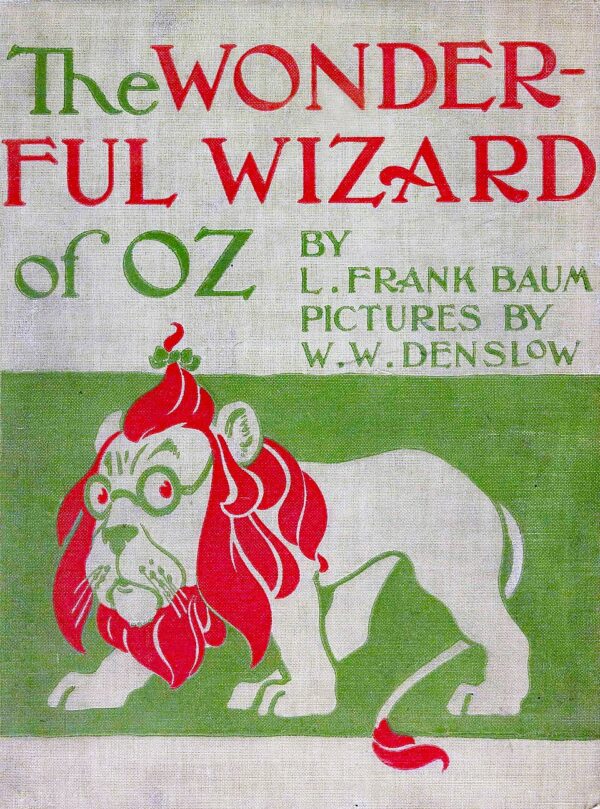
On May 17, 1900, L. Frank Baum gave the first copy of The Wonderful Wizard of Oz to his sister, Mary Louise Baum Brewster, marking the quiet beginning of one of the most enduring works in American children’s literature.
The book, first published in the United States that year, would soon become far more than a popular fairy tale. It introduced readers to Dorothy Gale, the Kansas girl swept away by a cyclone into a strange and colorful land; to the Scarecrow, who wanted a brain; the Tin Woodman, who longed for a heart; the Cowardly Lion, who sought courage; and the mysterious Wizard whose power proved far less impressive than his reputation.
Baum’s story was simple enough for children but rich enough to last for generations. At its center was a journey: Dorothy’s trip along the yellow brick road to the Emerald City, where she hoped the Wizard could send her home. Along the way, she discovered that the qualities her companions sought were already within them. The Scarecrow showed intelligence, the Tin Woodman compassion, and the Lion bravery. Dorothy, too, learned that home was not merely a place on a map, but a source of identity, belonging, and love.
That message helped separate The Wonderful Wizard of Oz from many earlier children’s stories. Baum wanted to create a distinctly American fairy tale, one that did not depend on European castles, kings, dragons, or moralizing sermons. In the introduction to the book, he argued that the old fairy tales had served their purpose and that modern children deserved stories written chiefly to delight them. His goal was fantasy without the grimness, wonder without the heavy-handed punishment, and adventure without the stern instructional tone that had shaped much 19th-century children’s literature.
The result was a story that felt both magical and familiar. Kansas was plain, dry, gray, and recognizable. Oz was dazzling, strange, and filled with witches, winged monkeys, poppy fields, enchanted shoes, and talking creatures. Baum’s genius was in connecting the two worlds. Dorothy was not a princess or a mythical hero. She was an ordinary American child whose virtues were loyalty, common sense, and persistence. That made her adventure accessible to young readers who could imagine themselves stepping into the same impossible world.
The book’s success was also shaped by its illustrations. Artist W.W. Denslow gave Oz a vivid visual identity, helping define the characters and landscapes that readers would remember. The illustrations were not incidental decorations; they were central to the book’s appeal. Together, Baum and Denslow created a work that looked and felt new, with a brightness and energy that matched the optimism of the story.

The novel quickly became popular, leading Baum to write many sequels set in Oz. Yet the first book remained the foundation. It established the geography, tone, and moral imagination of a world where courage, kindness, intelligence, and home mattered more than titles or appearances. The Wizard himself, exposed as an ordinary man using tricks and spectacle, gave the story one of its most lasting lessons: authority should not be mistaken for wisdom, and power often depends on illusion.
Over time, The Wonderful Wizard of Oz became part of the American cultural inheritance. It inspired stage productions, films, adaptations, political interpretations, academic debates, and countless retellings. The 1939 MGM film, The Wizard of Oz, later made Dorothy, Toto, the yellow brick road, and “there’s no place like home” familiar to millions who had never read Baum’s original text. But the book came first, born at the turn of the 20th century from Baum’s belief that children deserved wonder for its own sake.