
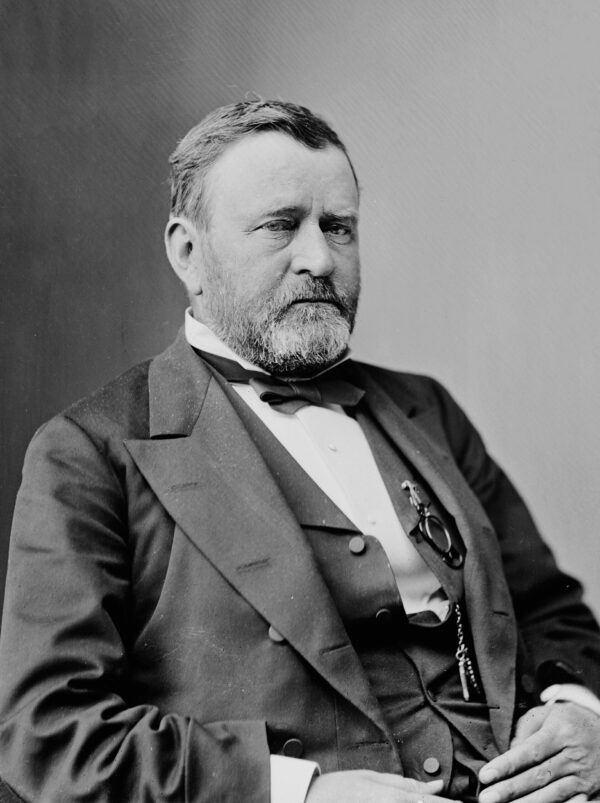
On May 22, 1872, President Ulysses S. Grant signed the Amnesty Act into law, taking one of the most consequential steps of the Reconstruction era toward restoring political rights to former Confederates.
The law did not settle the central conflicts of Reconstruction. It did not resolve the struggle over black citizenship, federal power, Southern resistance, or the future of the Republican Party in the former Confederacy. But it marked a major shift in the national mood seven years after the Civil War ended. A country that had fought to preserve the Union was now deciding how far punishment should extend, how long political exclusion should last, and whether reconciliation could proceed without sacrificing the rights of freedmen.
The question had been present since Appomattox. Under the Fourteenth Amendment, many former Confederate officials and military officers were barred from holding federal or state office if they had previously sworn an oath to support the Constitution and then joined the rebellion. The restriction reflected a simple constitutional logic: men who had betrayed the Union should not immediately return to governing it.
In the immediate aftermath of the war, that position had broad support among Republicans who feared that the old Southern ruling class would regain power, undermine emancipation, and restore a version of the antebellum order. Those fears were not theoretical. Across the South, former Confederates resisted Reconstruction governments, black political participation, and federal efforts to protect civil rights. White paramilitary groups used intimidation and violence to suppress Republican voters, black officeholders, and Unionist whites.
Grant understood those dangers. As president, he had backed federal enforcement efforts against the Ku Klux Klan and supported the use of national power to protect black citizens in the South. His administration helped enforce the Reconstruction amendments at a time when local authorities often refused to do so. Yet by 1872, political pressure for amnesty had grown stronger.
Part of that pressure came from Democrats, who argued that continued exclusion of former Confederates kept the South politically unstable and denied white Southerners full reintegration into national life. But the movement for amnesty also drew support from some Republicans, including reform-minded figures who believed that reconciliation would weaken Southern bitterness and reduce resistance to Reconstruction. Others saw amnesty as a practical political move, especially as the Republican Party faced internal divisions and Grant approached reelection.
The Amnesty Act reflected that changing calculation. It restored the right to hold office to most former Confederates who had been disqualified under the Fourteenth Amendment. Only a small group remained excluded, including certain high-ranking former federal officials, military officers, members of Congress, and other leading figures who had abandoned earlier constitutional oaths to support the Confederacy. In practical terms, the law restored full civil and political rights to all but about 500 former Confederate sympathizers.
For many white Southerners, the act represented a formal step back into national political life. Former rebels could again vote, run for office, and participate fully in the governments they had once fought to leave. For Grant and many members of Congress, it was presented as an act of national generosity, a sign that the Union could afford to be magnanimous after victory.

But the law also carried a deeper ambiguity. Amnesty for former Confederates did not guarantee justice for freedmen. Indeed, the restoration of political rights to many former rebels strengthened the very class of Southern leaders who were determined to roll back Reconstruction. As former Confederates returned to public office, they helped build what would become the “Redeemer” movement, a white Democratic campaign to dismantle Republican governments and reassert local control across the South.
That tension defined much of Reconstruction’s final decade. The federal government had expanded citizenship through the Thirteenth, Fourteenth, and Fifteenth Amendments, but the political will to enforce those guarantees was already beginning to weaken. Amnesty promised reunion, but it also helped empower men who opposed the biracial democracy Reconstruction had briefly made possible.