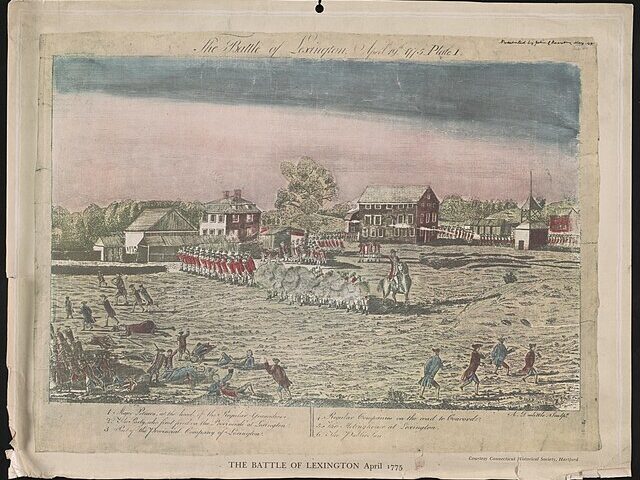
On April 19, 1775, the opening shots of the American Revolutionary War at Lexington and Concord—later immortalized as “the shot heard around the world”—gave way, almost immediately, to something more consequential than a single day’s fighting. As British regulars retreated into Boston under constant…
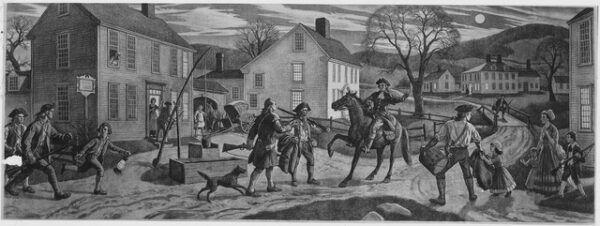
Read More“Listen, my children, and you shall hear Of the midnight ride of Paul Revere, On the eighteenth of April, in Seventy-Five: Hardly a man is now alive Who remembers that famous day and year.” So begins Henry Wadsworth Longfellow’s famous poem, immortalizing one of…
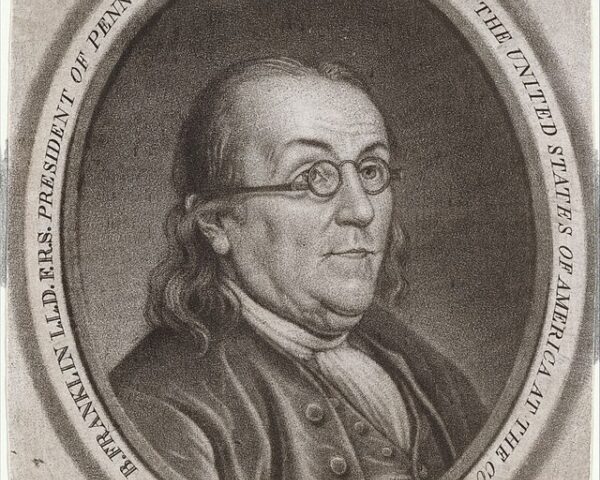
Read MoreOn April 14, 1775—just days before the first shots of the American Revolution were fired at Lexington and Concord—a quieter but no less consequential development took shape in Philadelphia. In a city already at the center of colonial resistance, a group of reform-minded citizens…
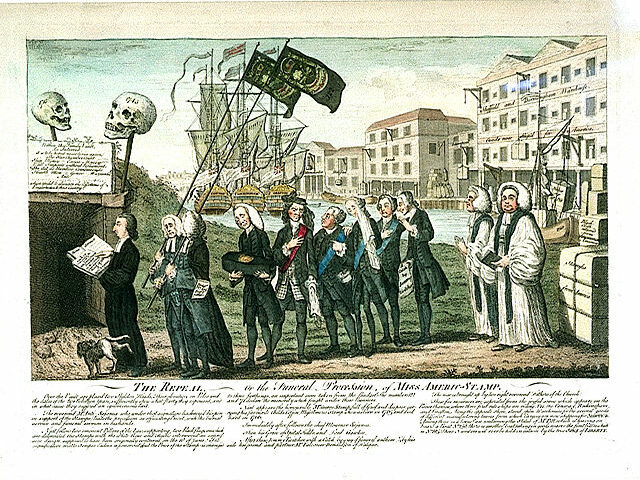
Read MoreOn March 22, 1765, the British Parliament passed a law that helped launch the American Revolution. Known as “Stamp Act,” The Gilder Lehrman Institute of American History writes that it was enacted “to help pay for British troops stationed in the colonies during the Seven Years’…
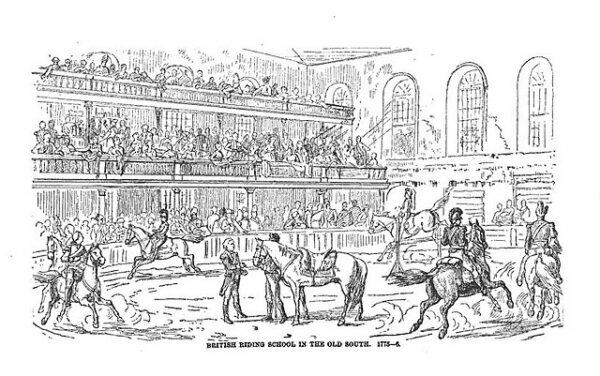
Read MoreOn the morning of March 17, 1776, the people of Boston watched a sight that would have seemed impossible only months earlier: the most powerful army in the world quietly abandoning the city it had occupied since the opening shots of rebellion. Red-coated soldiers…
Read MoreOn March 15, 1783, in a small meeting hall in Newburgh, New York, General George Washington delivered one of the most consequential speeches in American history. With the Revolutionary War effectively won but the new nation still fragile, Washington confronted a crisis that threatened…
Read MoreOn March 8, 1775—barely six weeks before the first shots of the American Revolution—a small but incendiary essay appeared in the Pennsylvania Journal and Weekly Advertiser. The piece carried no author’s name. Its title, however, left little doubt about its subject: “African Slavery in…
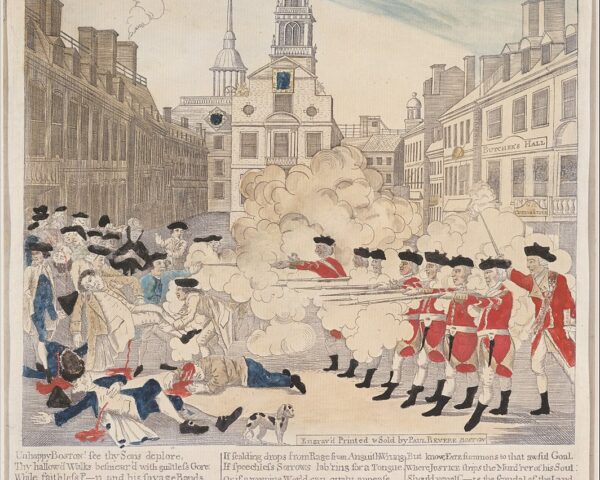
Read MoreThe Boston Massacre, a pivotal event in pre-revolutionary America, unfolded on the evening of March 5, 1770. Tensions between American colonists and British soldiers had been escalating for years, fueled by issues such as taxation without representation and the presence of British troops in…
Read MoreOn February 27, 1782, amid exhaustion, debt, and political revolt at home, the American Revolutionary War took a decisive turn—not on a battlefield in Virginia or the Carolinas, but on the floor of the House of Commons. In a dramatic vote, Britain’s elected chamber…
Read MoreOn February 22, 1770, in Boston’s North End, what began as a small disturbance quickly turned into a pivotal tragedy that echoed across colonial America and hinted at the revolution to come. Ebenezer Richardson, a British customs officer already despised by locals, fired a…
Read More