On April 14, 1775—just days before the first shots of the American Revolution were fired at Lexington and Concord—a quieter but no less consequential development took shape in Philadelphia. In a city already at the center of colonial resistance, a group of reform-minded citizens organized what would become the first formal abolition society in North America: the Pennsylvania Society for the Relief of Free Negroes Unlawfully Held in Bondage.
The organization’s founding reflected a growing unease among some colonists about the contradictions embedded in their own political philosophy. As resistance to British authority intensified, the language of natural rights—liberty, equality, and the inherent dignity of man—circulated widely in pamphlets, sermons, and political debates. Yet these ideals coexisted with the entrenched reality of chattel slavery, particularly in the southern colonies but also in northern port cities like Philadelphia.
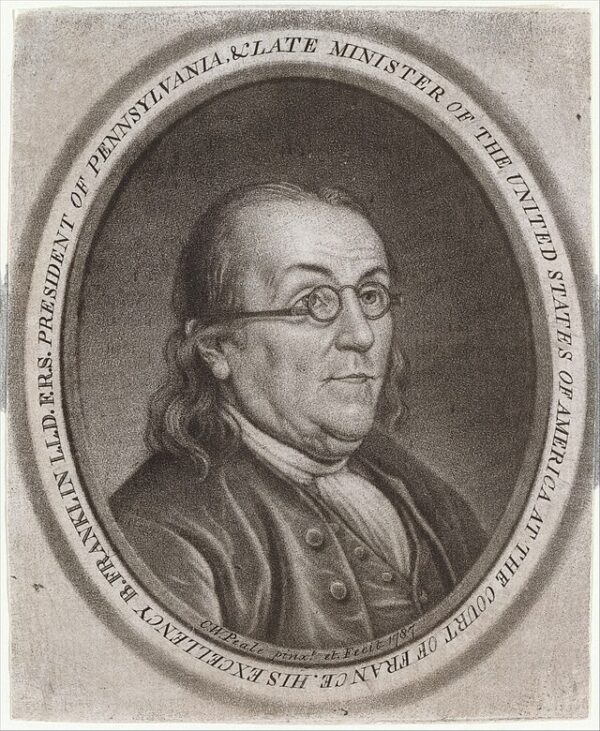
The society’s earliest leadership included prominent figures such as Benjamin Franklin and Benjamin Rush, though Franklin would assume a more active role in later years. Rush, a physician and civic reformer, was among the earliest outspoken critics of slavery in Pennsylvania. Drawing on both Enlightenment thought and religious conviction, he argued that slavery violated fundamental moral principles and undermined the emerging American claim to liberty.
The society’s initial focus was narrow but significant: to provide legal and material assistance to free Black individuals who had been unlawfully kidnapped or enslaved. At a time when the legal status of free Black people was often precarious—and when kidnapping rings operated with relative impunity—this work addressed a specific and urgent injustice. The organization sought to intervene through the courts, offering representation and advocacy to those whose freedom had been denied in practice, if not in law.
Philadelphia proved a fitting place for such an initiative. As the largest city in British North America and a hub of Quaker influence, it had long been home to religious dissenters who questioned the morality of slavery. Quaker abolitionist sentiment, though initially cautious and gradualist, had by the mid-18th century begun to crystallize into organized action. The society’s formation built on this foundation, translating moral concern into institutional form.
The timing of the society’s creation is striking. Within days, the colonies would be at war with Britain, and the political energy of the moment would shift decisively toward independence. In that context, the abolitionist cause did not immediately take center stage. Yet the ideals invoked in the struggle against imperial rule—particularly the assertion that all men possessed inalienable rights—would inevitably raise questions about the legitimacy of slavery itself.

Over time, the Pennsylvania Society expanded its mission. It moved beyond individual cases to advocate for broader legal reforms, including gradual emancipation. In 1780, Pennsylvania enacted one of the first laws in the Western world to begin the process of ending slavery, providing for the gradual emancipation of enslaved people born after its passage. Members of the society played a role in shaping and supporting such measures, using both legal arguments and moral persuasion to influence public opinion.
Franklin’s involvement deepened in the final years of his life. Serving as president of the society in the 1780s, he lent his considerable prestige to the abolitionist cause. In 1790, just months before his death, he signed a petition to Congress calling for the abolition of slavery and the slave trade. The petition sparked heated debate in the early federal government, revealing the extent to which the issue remained divisive even among the nation’s founding generation.