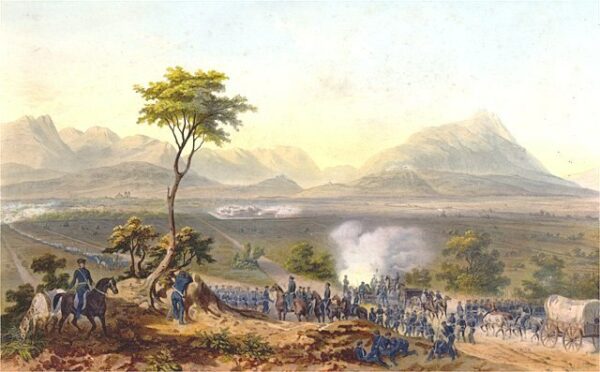
On May 13, 1846, the United States Congress formally declared war on the Federal Republic of Mexico—a decision that, while presented to the public as a response to a Mexican military incursion, in fact reflected the culmination of deeper ideological currents, territorial ambitions, and…
Read MoreOn May 12, 1593, London playwright Thomas Kyd was arrested in one of the most revealing episodes of Elizabethan literary history, a case that exposed the dangerous overlap between theater, politics, religion, and state surveillance in late Tudor England. Kyd was already an important…
Read MoreOn May 12, 1846, the ill-fated journey of the Donner Party began their journey as they departed from Independence, Missouri, embarking on a journey that would ultimately become one of the most tragic tales of American pioneer history. Led by George Donner and James…
Read MoreOn May 12, 1743, Maria Theresa of Austria—daughter of the late Emperor Charles VI and the embattled heiress to the Habsburg dominions—was crowned Queen of Bohemia in Prague’s St. Vitus Cathedral, sealing a hard-won victory not only over the armies of her Bavarian rival,…
Read MoreOn May 11, 330, Constantine the Great marked one of the most consequential acts of urban and imperial reorientation in world history: the dedication of the rebuilt city of Byzantium as New Rome. The city would soon be known as Constantinople, and for more…
Read MoreOn May 11, 1997, history was made in the world of chess when IBM’s supercomputer Deep Blue defeated the reigning world chess champion, Garry Kasparov, in a six-game match. The victory of a machine over a human grandmaster marked a significant milestone in the development of…
Read MoreOn May 11, 973, a landmark event in English history unfolded at Bath Abbey: the formal coronation of King Edgar, known to posterity as Edgar the Peaceful. Though he had already ruled England since 959, this ceremony was not simply a public confirmation of…
Read MoreOn May 10, 1775, delegates from across the American colonies gathered in Philadelphia for the opening of the Second Continental Congress, a meeting that began as an emergency response to war and soon became the central political body of the American Revolution. The Congress…
Read MoreOn May 10, 1869, in the arid expanse of Utah Territory at a place called Promontory Summit, two locomotives faced each other across a polished laurel tie as dignitaries and railroad workers looked on. Then, with the ceremonial tapping of a golden spike into…
Read MoreOn May 9, 1926, American aviator Richard E. Byrd and pilot Floyd Bennett returned to Spitsbergen, Norway, with one of the most dramatic claims in the history of polar exploration: they had flown over the North Pole. The flight, made in a three-engine Fokker…
Read More