On May 14, 1610, France lost the king who had ended its religious wars and gained a child monarch who inherited both his throne and his unfinished work. Henry IV, the first Bourbon king of France, was assassinated in Paris by François Ravaillac, a…
Read MoreIn a bizarre legal footnote to American religious history—and a final echo of the spectral hysteria that once gripped colonial New England—the last case resembling a witchcraft trial in the United States began not in the 17th century, but in 1878. Nearly two centuries…
Read MoreOn May 13, 1862, Robert Smalls turned the logic of slavery against the Confederacy. Smalls was 23 years old, enslaved in Charleston, South Carolina, and working aboard the Planter, a Confederate transport steamer used to move troops, supplies, ammunition, and artillery through Charleston Harbor.…
Read MoreOn May 13, 1981, as Pope John Paul II greeted the crowds gathered in St. Peter’s Square, Mehmet Ali Ağca emerged from the throng, brandishing a handgun. In a matter of seconds, shots rang out, shattering the tranquility of the moment and plunging the square…
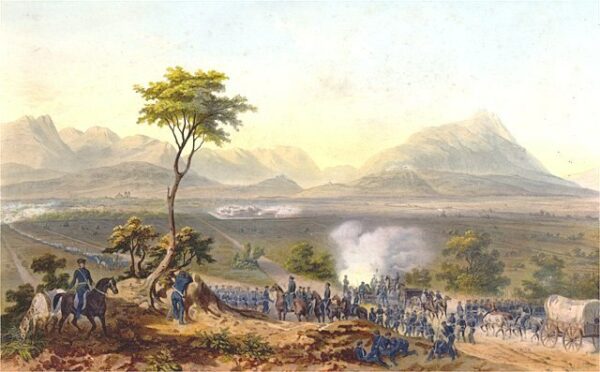
Read MoreOn May 13, 1846, the United States Congress formally declared war on the Federal Republic of Mexico—a decision that, while presented to the public as a response to a Mexican military incursion, in fact reflected the culmination of deeper ideological currents, territorial ambitions, and…
Read MoreOn May 12, 1593, London playwright Thomas Kyd was arrested in one of the most revealing episodes of Elizabethan literary history, a case that exposed the dangerous overlap between theater, politics, religion, and state surveillance in late Tudor England. Kyd was already an important…
Read MoreOn May 12, 1846, the ill-fated journey of the Donner Party began their journey as they departed from Independence, Missouri, embarking on a journey that would ultimately become one of the most tragic tales of American pioneer history. Led by George Donner and James…
Read MoreOn May 12, 1743, Maria Theresa of Austria—daughter of the late Emperor Charles VI and the embattled heiress to the Habsburg dominions—was crowned Queen of Bohemia in Prague’s St. Vitus Cathedral, sealing a hard-won victory not only over the armies of her Bavarian rival,…
Read MoreOn May 11, 330, Constantine the Great marked one of the most consequential acts of urban and imperial reorientation in world history: the dedication of the rebuilt city of Byzantium as New Rome. The city would soon be known as Constantinople, and for more…
Read MoreOn May 11, 1997, history was made in the world of chess when IBM’s supercomputer Deep Blue defeated the reigning world chess champion, Garry Kasparov, in a six-game match. The victory of a machine over a human grandmaster marked a significant milestone in the development of…
Read More