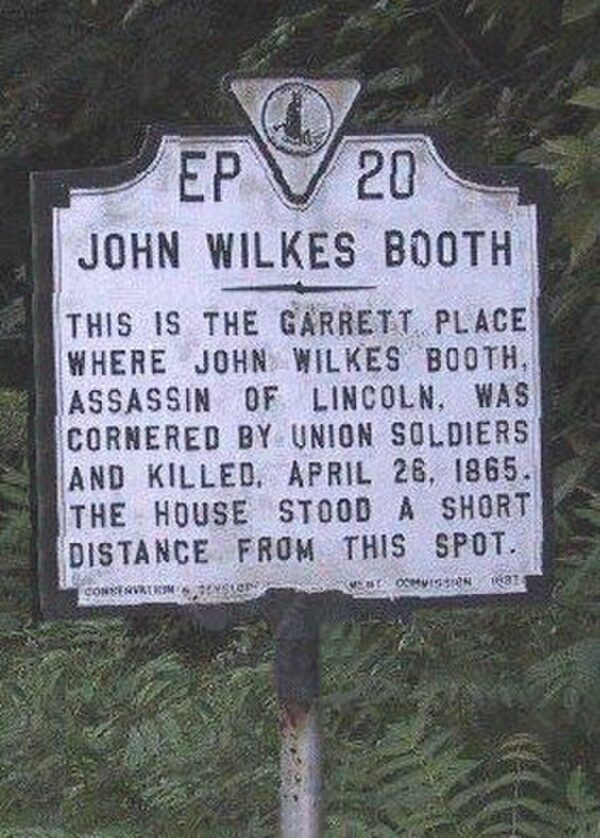
On April 26, 1865, twelve days after the assassination of Abraham Lincoln, Union cavalrymen cornered and killed his assassin, John Wilkes Booth, bringing a dramatic end to one of the most intense manhunts in American history. The confrontation unfolded in rural Virginia, at a tobacco barn on the farm of Richard H. Garrett, where Booth had taken refuge following nearly two weeks on the run.
Booth, a well-known actor and Confederate sympathizer, had shot Lincoln at Ford’s Theatre in Washington, D.C., on the night of April 14, 1865. The president died the following morning, plunging the nation—already exhausted by four years of civil war—into grief and shock. In the immediate aftermath, federal authorities launched a sweeping search for Booth and his co-conspirators, offering a substantial reward and mobilizing military forces across the region.
After fleeing Washington, Booth and an accomplice, David Herold, crossed into Maryland and eventually made their way into Virginia. Booth, who had broken his leg while escaping the theater, relied heavily on assistance from Confederate sympathizers. Despite these efforts, the tightening net of Union patrols and informants steadily reduced his options. By April 24, intelligence reports had placed the fugitives in the vicinity of Port Royal, Virginia.
In the early hours of April 26, Union cavalrymen from the 16th New York Cavalry, led by Lt. Edward P. Doherty and guided by detective Luther B. Baker and his team, surrounded the Garrett farm. The soldiers quickly captured Herold, who surrendered without resistance. Booth, however, refused to come out of the barn, reportedly declaring that he would not be taken alive.
As negotiations stalled, the Union troops decided to force the issue. The barn was set ablaze in an attempt to flush Booth out. Flames quickly consumed the structure, illuminating the interior and exposing Booth’s position. It was at this moment that Sgt. Boston Corbett, a soldier in the detachment, fired a shot through the barn wall, striking Booth in the neck.
Mortally wounded, Booth was dragged from the burning barn and laid on the ground outside. Accounts from the scene describe him as conscious but paralyzed, unable to move his limbs. He lingered for several hours, reportedly whispering his final words and asking that his hands be raised so he could see them. According to witnesses, he uttered, “Useless, useless,” before dying shortly after sunrise.

Booth’s death effectively closed the most urgent chapter of the federal investigation into Lincoln’s assassination, though the broader conspiracy continued to unfold in the weeks that followed. Several co-conspirators, including Lewis Powell (also known as Lewis Paine), Mary Surratt, and George Atzerodt, were later tried by military tribunal and executed for their roles in the plot.
The killing of Booth carried both symbolic and practical significance. For many in the North, it represented a measure of justice for the slain president and a necessary step toward national closure. Yet the circumstances of his death—shot rather than captured and tried—also left lingering questions about what further information Booth might have revealed about the conspiracy and its possible connections.