
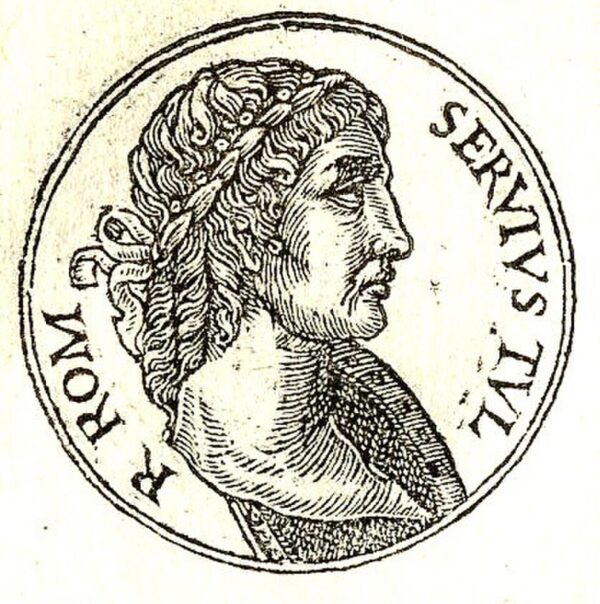
On May 25, 567 B.C., Servius Tullius, the sixth king of Rome, celebrated a triumph over the Etruscans, marking one of the earliest recorded moments in which Rome presented itself not merely as a surviving city, but as an expanding power in central Italy. The date appears in the Fasti Triumphales, the Roman record of triumphs, which lists Servius Tullius as triumphing over the Etruscans on “8 k. Jun.” — May 25 — in 567/6 B.C.
The event belongs to the half-legendary age of Rome’s kings, when memory, myth, and later political interpretation were woven together into the story of the city’s rise. Servius Tullius was remembered by Roman writers as a ruler of unusual origins and unusual consequence. Ancient accounts described him as a man who rose from uncertain or humble beginnings into the royal house, eventually succeeding Tarquinius Priscus and ruling before the final king, Tarquinius Superbus.
His triumph over the Etruscans was therefore more than a military celebration. It was also a political statement. Servius had come to power under circumstances that later Romans regarded as irregular. Unlike earlier kings, he was not remembered as having been elevated through the usual popular process. His rule needed confirmation, and war provided it. According to Livy, Servius fought against Veii and other Etruscans after a truce had expired, distinguished himself in battle, defeated a large enemy force, and returned to Rome with his kingship strengthened.
The triumph was Rome’s most solemn celebration of military victory. A victorious commander entered the city in procession, displaying the spoils of war, the captives of the defeated enemy, and the favor of the gods. In later centuries, the ritual would become one of the great symbols of Roman power, reserved for generals whose victories enlarged the state and honored the Republic or empire. In the age of Servius, the institution was still attached to kingship, but its meaning was already clear: victory abroad could settle authority at home.
The Etruscans were not distant enemies. They were Rome’s powerful neighbors and, in some respects, its teachers and rivals. Etruscan influence shaped early Roman religion, ceremony, urban development, and political symbolism. Rome’s relationship with the Etruscan cities was therefore complicated. It involved imitation and hostility, alliance and war. A triumph over the Etruscans announced that Rome was no longer merely one Latin settlement among others. It was a city capable of challenging the dominant powers of the region.

Servius’ later reputation rested even more heavily on reform than conquest. Roman tradition credited him with reorganizing the population into census classes, expanding the city’s tribal divisions, and strengthening Rome’s physical and civic structure. These so-called Servian reforms helped later Romans explain the origins of their military organization and political order. Whether every reform attributed to him was truly his work is uncertain, but the memory of Servius became attached to the idea that Rome’s greatness required institutions as well as victories.
His end was violent. Roman tradition held that he was murdered in a palace coup by Tarquinius Superbus, whose tyranny eventually provoked the overthrow of the monarchy and the founding of the Republic. That later story made Servius the last “good” king in Roman memory: a ruler whose authority was confirmed by victory, whose reign was associated with reform, and whose death helped frame monarchy itself as dangerous when severed from law.