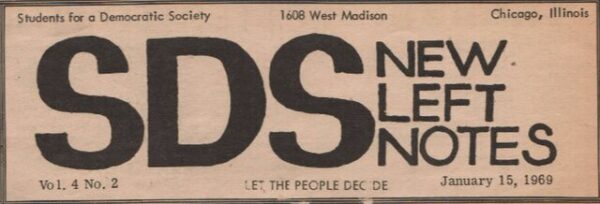
On November 11, 1967—at a moment when the Vietnam War had already metastasized from a military conflict into a sprawling contest over national resolve—the Viet Cong staged one of the most striking propaganda rituals of the era. In Phnom Penh, Cambodia, three American prisoners of war were paraded before the cameras, then ceremonially transferred not to neutral authorities or U.S. diplomats but to Tom Hayden, the ascendant figure of the “New Left” whose antiwar activism had, by that point, become an indispensable asset in Hanoi’s psychological campaign against the United States. The symbolism was unmistakable: the Communists would use American dissent as a lever against American power, and they would do so openly.
This was theater—ideologically freighted, meticulously engineered, and aimed squarely at the American home front. Hanoi’s strategists had long understood that they could not outgun the United States; instead, they sought to outlast it by eroding the domestic legitimacy of the war itself. The spectacle in Phnom Penh thus functioned as a kind of political alchemy: American captives, reduced by months of coercion, were displayed as proof of Washington’s moral bankruptcy, while Hayden was elevated to the status of an informal diplomat, a conduit through which the Viet Cong could communicate their preferred narrative to the U.S. media ecosystem. What better way to demonstrate that America was divided—fatally, perhaps—than to hand American soldiers to an American radical?
Hayden arrived in Cambodia with the aura of someone who had come to represent more than a movement. He embodied a worldview: that U.S. power was inherently suspect, that the war in Vietnam was not a conflict against Communist expansion but a symptom of America’s imperial pathology, and that the true “struggle” lay not in Southeast Asia but in American streets, campuses, and congressional hearing rooms. In the eyes of Hanoi, he was the perfect intermediary—credible to Western reporters, sympathetic to the revolution, and already inclined to cast American soldiers as either expendable instruments or unwitting accomplices of a misguided state. For conservatives watching the event unfold, this was not dissent but a kind of political transference, in which the moral vocabulary of the New Left seamlessly fused with the strategic aims of America’s enemy.
The prisoners—Sergeants David Watson and George E. Smith, and Specialist 4 James Daly—were compelled to denounce U.S. policy in scripted statements characteristic of Communist “confession” rituals dating back to Stalin’s purges. Any careful observer could see the familiar markers of coercion: the stilted cadence, the ideological boilerplate, the visible strain etched into their faces. Yet upon their dissemination, these statements were immediately absorbed into America’s partisan bloodstream. Antiwar activists treated them as confirmation of their long-standing claims that the war was morally indefensible; supporters of the war saw, instead, the grim efficiency of Communist psychological operations. The divide was not merely tactical but epistemic: what counted as truth, and who had the authority to speak it, depended almost entirely on one’s political priors.

What the Phnom Penh ceremony revealed, in the starkest possible terms, was the asymmetry at the heart of the Vietnam conflict. The United States possessed overwhelming military superiority but remained acutely vulnerable to political warfare—precisely because an open society and the willingness of the “New Left” to help the enemy. The Viet Cong did not need to defeat American troops; they needed only to convince enough Americans that continued sacrifice was futile, immoral, or corrupt. In this sense, the handover to Hayden was not merely a diplomatic insult but an ideological gambit designed to transform U.S. pluralism into a strategic liability.