
The Roman Empire had endured violent transitions before, but few moments captured the corrosion of its political order more starkly than the events of March 28, 193 A.D.—a day when imperial authority was not inherited, earned, or even seized in battle, but openly sold to the highest bidder.
The crisis began with the brief and ill-fated reign of Publius Helvius Pertinax. A seasoned administrator and former soldier, Pertinax ascended to the throne on January 1, 193, following the assassination of the erratic emperor Commodus. Rome, weary of excess and instability, initially welcomed Pertinax’s promise of discipline and reform. He moved quickly to restore fiscal order, curb corruption, and reimpose military standards that had eroded under his predecessor.
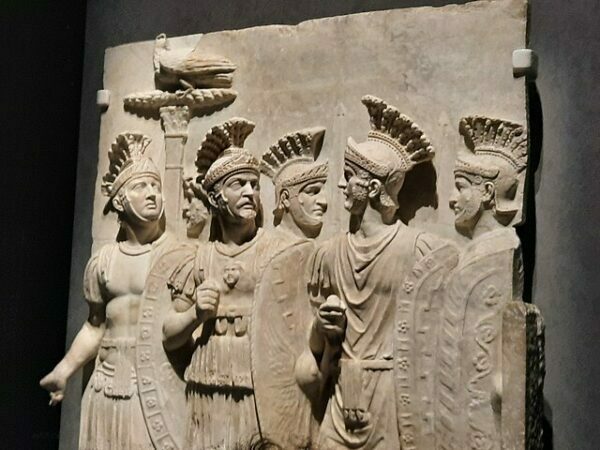
But these reforms came at a cost. Chief among Pertinax’s adversaries were the Praetorian Guard, the imperial bodyguard that had evolved into a powerful political force. Accustomed to lavish donatives—cash bonuses distributed by emperors to secure loyalty—the Guard found Pertinax’s austerity both insulting and threatening. When he attempted to discipline their ranks and reduce their privileges, resentment hardened into conspiracy.
On March 28, after just 86 days in power, Pertinax was confronted by a group of mutinous guardsmen within the imperial palace. Ancient sources suggest he attempted to reason with them, appealing to their sense of duty. It was a futile gesture. He was struck down where he stood, becoming yet another emperor undone not by foreign enemies, but by those sworn to protect him.
What followed transformed a palace coup into a grotesque spectacle. With the throne suddenly vacant, the Praetorian Guard did not immediately install a successor through traditional channels. Instead, they made a calculation: imperial power, in that moment, was theirs to distribute—and profit from. They withdrew to their fortified camp and announced that the empire would be awarded to the man who offered the highest payment.
Two principal bidders emerged. One was Titus Flavius Sulpicianus, the city prefect and father-in-law of Pertinax, who had both political standing and proximity to the Guard’s camp. The other was Didius Julianus, a wealthy senator known less for military distinction than for his immense fortune and ambition.
According to the historian Cassius Dio, the bidding escalated rapidly, with offers shouted from outside the camp walls. Sulpicianus reportedly promised a substantial donative, but Julianus outbid him, offering 25,000 sesterces to each guardsman—a staggering sum. The Guard accepted. In a transaction as brazen as it was unprecedented, they proclaimed Julianus emperor.
The Roman Senate, faced with armed force and few alternatives, ratified the decision that same day. Julianus entered the city not as a conquering hero, but as a purchaser of power. The reaction among Rome’s populace was immediate and hostile. Crowds reportedly jeered him in the streets, denouncing both the man and the manner of his elevation. The legitimacy of imperial authority, already fragile, now appeared openly compromised.

The consequences were swift. News of the auction spread rapidly across the provinces, where several generals commanded loyal legions. Among them was Septimius Severus, governor of Pannonia, who was proclaimed emperor by his troops. Rather than accept the degradation of the office, Severus marched on Rome, presenting himself as the avenger of Pertinax and restorer of order.
Julianus’s position, never secure, collapsed almost as quickly as it had been purchased. As Severus advanced, the Senate abandoned Julianus, sentencing him to death after a reign of just 66 days. He was executed in June 193, reportedly asking, “But what evil have I done? Whom have I killed?” The question, if genuine, missed the point. His crime was not personal violence, but participation in a system that had reduced the imperial office to an object of sale.
The episode marked the beginning of the so-called “Year of the Five Emperors,” a period of civil war that would ultimately end with Severus’s consolidation of power. Yet the deeper significance of March 28 lies in what it revealed: the extent to which Rome’s institutions had become subordinate to the interests of armed factions. The Praetorian Guard, once a protective force, had become kingmakers—and, for a moment, auctioneers of the world’s most powerful title.