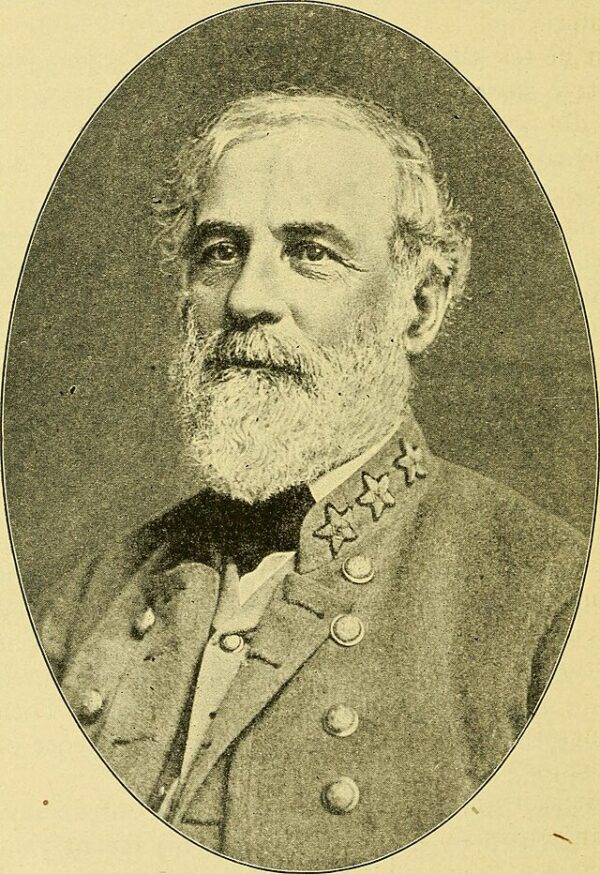
On April 20, 1861, just days after the outbreak of the American Civil War, Colonel Robert E. Lee resigned his commission in the United States Army, ending more than three decades of federal service and setting in motion one of the most consequential personal decisions of the conflict.
Lee’s resignation came in the immediate aftermath of Fort Sumter and Abraham Lincoln’s call for 75,000 volunteers to suppress what the federal government regarded as a rebellion. The proclamation forced slaveholding border states, including Virginia, to confront a stark choice: remain in the Union or join the seceding Confederacy. On April 17, Virginia’s convention voted to secede, though the decision would not be ratified by popular vote until May. In the interim, loyalties were tested in real time.
Lee, a Virginian by birth and identity, found himself at the center of that tension. A West Point graduate and veteran of the Mexican-American War, he had built a reputation as one of the most capable officers in the U.S. Army. In March 1861, he had been promoted to colonel of the 1st U.S. Cavalry. Within weeks, his superiors were quietly considering him for a far larger role. General-in-Chief Winfield Scott, himself a Virginian, reportedly viewed Lee as a potential commander of Union forces in the field.
According to contemporary accounts, Lee was approached indirectly about taking command of the Union army. He declined. While he opposed secession in principle—writing that it was “nothing but revolution”—he also made clear that he would not take up arms against his home state. That distinction, at once moral and geographic, would define his decision.
On April 18, Lee met with Francis Preston Blair in Washington, who conveyed the administration’s interest in placing him in high command. Lee did not accept. That same evening, he returned to his home at Arlington and conferred with family. The following day, he wrote to Scott, expressing gratitude but declining any role that would place him in opposition to Virginia.
“I cannot raise my hand against my birthplace, my home, my children,” Lee reportedly told associates during this period, capturing the personal calculus that overrode his professional obligations.
On April 20, Lee formalized the break. In a brief but consequential letter to the War Department, he resigned his commission. “Save in the defense of my native state,” he wrote, “I never desire again to draw my sword.” Within days, he would accept appointment as a major general in Virginia’s state forces, which were soon integrated into the Confederacy.
The decision carried immediate military implications. The Union lost an experienced officer at a moment when its command structure was still forming. The Confederacy gained a leader whose strategic thinking would shape the war in the eastern theater. Over the next four years, Lee would command the Army of Northern Virginia, emerging as the Confederacy’s most prominent general.
But on April 20, none of that was predetermined. Lee’s resignation reflected the fractured nature of American identity in 1861, when allegiance to state and nation could diverge sharply. For many officers, particularly those from the Upper South, the question was not abstract but immediate: whether duty to the United States superseded loyalty to one’s state.
The consequences of those choices were uneven. Some Southern-born officers, including George H. Thomas, remained with the Union and were later ostracized by their home communities. Others, like Lee, aligned with their states, accepting the risks that came with rebellion. In Virginia’s case, that meant becoming the central battleground of the war.

Lee’s resignation also underscored the speed with which the crisis escalated. Less than a week separated the firing on Fort Sumter from Virginia’s secession vote and Lee’s departure from the U.S. Army. Institutional loyalties that had been assumed to be durable proved contingent under pressure.
In hindsight, Lee’s choice has been debated as both an act of personal integrity and a decision with far-reaching consequences. At the time, it was framed by those closest to him as a reluctant but necessary step. He did not publicly campaign for secession, nor did he frame his resignation in ideological terms. Instead, he presented it as a matter of obligation to Virginia.
By the end of April 1861, the lines were drawn. Lee, once a rising officer in the United States Army, had abandoned his oath to the United States Constitution and cast his lot with a new and unrecognized Confederacy.