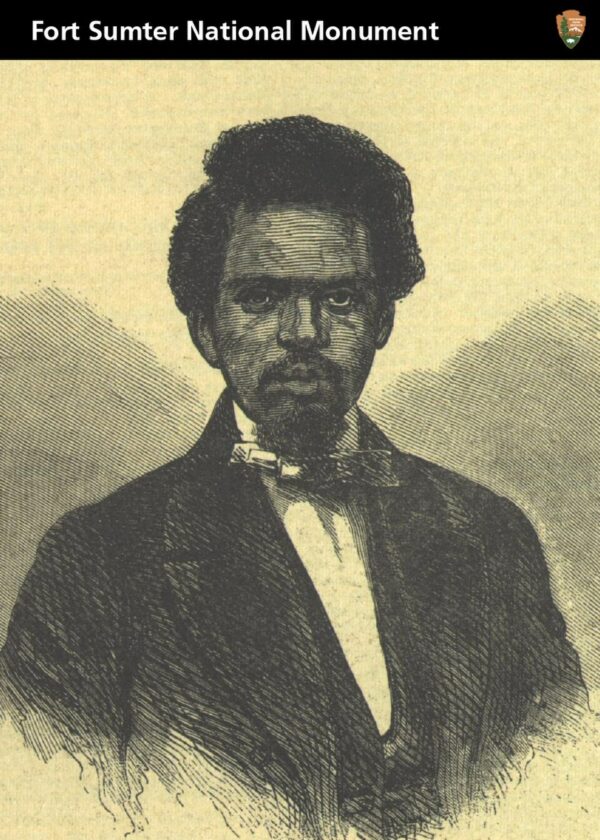
On May 13, 1862, Robert Smalls turned the logic of slavery against the Confederacy.
Smalls was 23 years old, enslaved in Charleston, South Carolina, and working aboard the Planter, a Confederate transport steamer used to move troops, supplies, ammunition, and artillery through Charleston Harbor. He knew the vessel. He knew the channels. He knew the signals required to pass Confederate checkpoints. Most important, he understood that the same skills slavery had forced him to develop could become the means of escape.
The opportunity came when the Planter’s white officers left the ship for the night. Smalls and the enslaved Black crew had already discussed the danger. Escape by land was nearly impossible. Charleston was heavily guarded, and Confederate patrols controlled the surrounding roads and waterways. But outside the harbor, Union blockading ships waited. Between the wharf and freedom stood Confederate forts, including Fort Sumter, whose guns could destroy the vessel if the deception failed.
Smalls did not intend to escape alone. Before dawn, he brought aboard his wife, Hannah, their children, and the families of other crew members. The plan was therefore not merely a theft of Confederate property. It was a rescue mission. If discovered, the men could be executed, and their families returned to slavery or worse. Yet Smalls chose the narrowest path: to sail the Planter out of Charleston as if nothing unusual were happening.
Wearing clothing associated with the ship’s Confederate captain, Smalls guided the steamer away from the wharf around 4 a.m. He moved through the harbor with deliberate calm, giving the correct whistle signals as the vessel passed Confederate positions. The deception depended on nerve as much as knowledge. A rushed movement, a missed signal, or an unexpected order from shore could have exposed the entire plot.
The most dangerous moment came near Fort Sumter. Smalls kept the Planter on its expected course rather than veering away and attracting suspicion. Once the ship cleared the Confederate guns, the crew lowered the Confederate flag and raised a white sheet as a signal of surrender to the Union blockade. The Planter then approached the USS Onward, where Smalls delivered the ship, its weapons, its ammunition, and valuable intelligence about Confederate defenses to the United States Navy.
The achievement was militarily significant. The Planter carried guns and supplies, but Smalls’s knowledge of Charleston Harbor was even more valuable. He provided Union forces with information about Confederate mines, signals, and fortifications. In one morning, an enslaved man had deprived the Confederacy of a vessel, liberated his family and crew, and strengthened the Union war effort.
The symbolism was even larger. At a time when many Americans still doubted whether Black men should be armed, enlisted, or treated as full participants in the war, Smalls made an argument no speech could match. He had commanded a Confederate vessel through one of the South’s most important harbors and delivered it to the United States. His courage helped undermine the racist assumptions that had long been used to defend slavery and exclude Black Americans from military service.

The Planter was soon taken into Union service, first by the Navy and then by the Army. Smalls continued serving the Union as a pilot and later became closely associated with the vessel. Many accounts credit him as the first Black man to command a United States ship, though the precise nature of his wartime commission has been debated; what is clear is that he later served as captain or acting commander of the Planter and was paid in that capacity.
Smalls’s story did not end with the Civil War. After emancipation, he became one of the most important Black political leaders of Reconstruction. He served in South Carolina politics, helped shape the state’s postwar constitutional order, and later represented South Carolina in the U.S. House of Representatives. The man who had once been treated as property became a lawmaker in the republic he had risked his life to defend.
The seizure of the Planter remains one of the most dramatic escapes from slavery in American history because it joined personal liberation to national consequence. Smalls did not simply flee bondage. He carried his family, his crew, a Confederate ship, and a blow against the slaveholding rebellion into Union hands. On May 13, 1862, Robert Smalls proved that freedom was not something merely granted from above. Sometimes it was seized before dawn, steered through enemy guns, and delivered under a white flag to the cause of the United States.