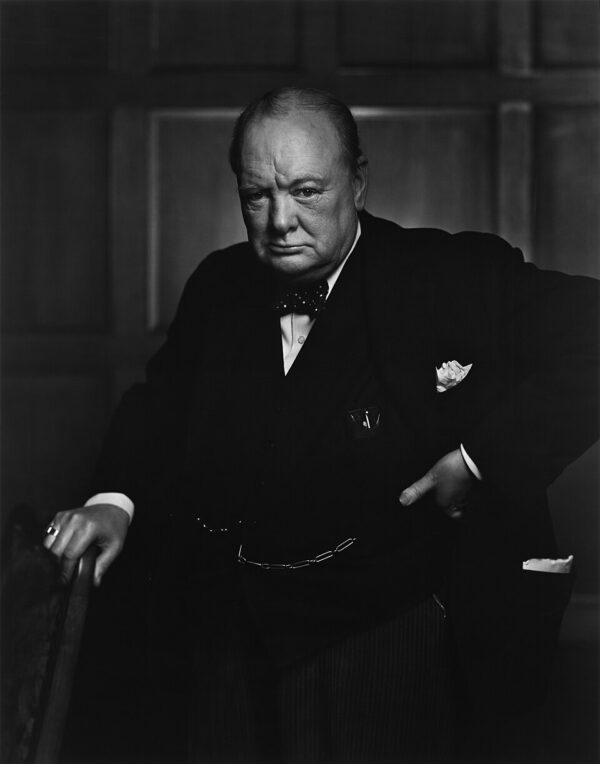
On May 7, 1940, the British House of Commons began one of the most consequential parliamentary debates in modern history. It was formally a debate over Norway, a campaign that had exposed the failures of British military planning in the early months of World War II. But by the time the debate ended, it had become something larger: a judgment on Neville Chamberlain’s leadership, a test of Britain’s wartime resolve, and the immediate prelude to Winston Churchill’s rise as prime minister.
The crisis began in Scandinavia. Germany had invaded Denmark and Norway in April 1940, seeking to secure strategic ports, protect access to Swedish iron ore, and strengthen its position in the North Atlantic. Britain and France had already considered operations in the region, but Germany moved first and with greater speed. Denmark fell almost immediately. Norway became the site of a confused and poorly coordinated Allied response.
British forces landed in Norway, but the campaign quickly turned into a disaster. The Germans seized key ports, controlled the air, and moved with a tactical efficiency the Allies could not match. British troops fought bravely, but they were hampered by inadequate equipment, poor planning, weak air cover, and divided command. The Royal Navy achieved moments of success, including at Narvik, but the broader campaign exposed the limits of Britain’s readiness.
By early May, the government was under intense pressure. Chamberlain had already been weakened by the memory of appeasement, especially the Munich Agreement of 1938, which had failed to preserve peace and had become a symbol of misplaced confidence in Adolf Hitler. The war had begun in September 1939, but for months Britain and France had done little on the Western Front. This period, often called the “Phoney War,” created an uneasy impression that the government was not prosecuting the conflict with sufficient energy.
Norway shattered that illusion. The failure there suggested that Britain was not merely cautious but ill-prepared. It also made clear that the war would not be won by delay, diplomacy, or half-measures. A government formed for peace had not yet become a government fit for national survival.
The debate opened in the House of Commons on May 7. Chamberlain’s defenders tried to present Norway as a difficult operation conducted under severe circumstances. But criticism came from across the political spectrum, including from members of Chamberlain’s own Conservative Party. The attack was not only about military tactics. It was about confidence. Could the same leadership that had misread Hitler before the war now be trusted to defeat him?
The most devastating words came from Conservative MP Leo Amery, who invoked Oliver Cromwell’s famous rebuke to the Long Parliament: “You have sat too long here for any good you have been doing. Depart, I say, and let us have done with you. In the name of God, go.” It was a parliamentary thunderclap. Amery’s words captured the mood of a country that sensed it was entering an existential struggle under leadership no longer equal to the hour.
Chamberlain survived the formal vote, but only technically. The government’s majority collapsed from more than 200 to 81, a political wound too serious to ignore. In normal circumstances, that might have been survivable. In May 1940, with Germany preparing its offensive in Western Europe, it was fatal.
The central question became who could form a government of national unity. Chamberlain hoped that Lord Halifax, the foreign secretary, might succeed him. Halifax was respected, cautious, and close to the king, but he sat in the House of Lords, not the Commons, and doubted whether he could lead a war government effectively from outside the elected chamber.
Churchill, by contrast, had long warned of the Nazi threat. He had been brought back into government as First Lord of the Admiralty when war broke out, and although he shared responsibility for the Norway campaign, he had something Chamberlain lacked: credibility as a man who had understood the danger before it was fashionable or convenient to do so.

On May 10, three days after the Norway Debate began, Chamberlain resigned. The same day, Germany launched its invasion of Belgium, the Netherlands, Luxembourg, and France. Britain’s political crisis merged instantly with a military catastrophe on the continent. Churchill became prime minister not in a moment of calm transition, but as Europe was collapsing.
The Norway Debate mattered because it demonstrated that parliamentary government could still act decisively under extreme pressure. Britain did not replace Chamberlain through revolution, military intervention, or palace intrigue. It did so through debate, dissent, and the withdrawal of political confidence. The system worked precisely because it allowed failure to be confronted in public.
Churchill’s elevation did not guarantee victory. In May 1940, Britain stood in grave peril, soon facing the fall of France and the evacuation at Dunkirk. But the change in leadership altered the moral and political direction of the war. Chamberlain had managed the drift from appeasement to conflict. Churchill gave Britain a language of resistance and a government prepared to fight on.