
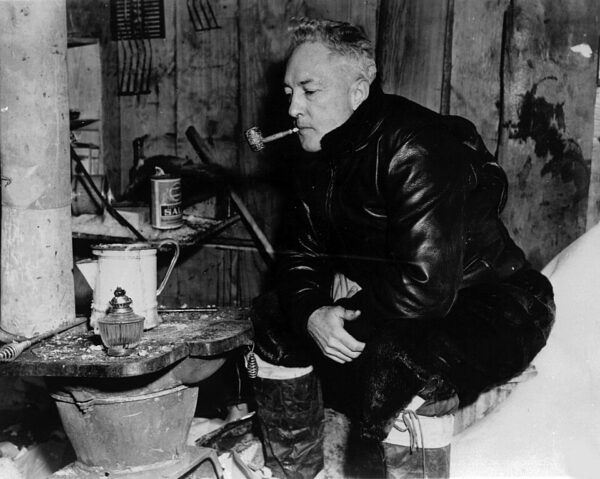
On May 9, 1926, American aviator Richard E. Byrd and pilot Floyd Bennett returned to Spitsbergen, Norway, with one of the most dramatic claims in the history of polar exploration: they had flown over the North Pole.
The flight, made in a three-engine Fokker aircraft named the Josephine Ford, came at a moment when aviation and exploration were becoming inseparable. The airplane had transformed war only a decade earlier, and now it promised to conquer the last unreachable places on earth. For centuries, the North Pole had represented distance, danger, and national prestige. Explorers had gone after it by ship, sled, dog team, and sheer endurance. Byrd and Bennett attempted something different. They would try to master the Arctic from the air.
Byrd, a U.S. Navy officer and ambitious explorer, had traveled to the Arctic with a carefully organized expedition. Bennett, a skilled Navy pilot, handled the aircraft. Their base was King’s Bay on Spitsbergen, a Norwegian island group far north of mainland Europe. From there, the pole lay hundreds of miles across ice, fog, wind, and featureless white terrain.
Navigation was one of the central challenges. In the Arctic, landmarks were scarce, magnetic compasses were unreliable near the pole, and bad weather could erase the horizon. Byrd relied on instruments, dead reckoning, and solar observations. On May 9, the two men took off in the Josephine Ford, flew north across the ice, and later returned to King’s Bay. Byrd announced that they had reached the pole and flown back safely.
The claim immediately made them heroes. Byrd submitted his navigational records to the U.S. Navy and to a National Geographic Society committee, which accepted his account. The achievement brought fame, medals, and public admiration. Bennett, in particular, became known as the courageous pilot who had helped carry American aviation into the age of polar exploration. Byrd’s reputation grew even larger; he would later become one of the most famous figures associated with Antarctic exploration.

Yet the story did not end there. Almost from the beginning, questions lingered. Some observers wondered whether the flight had been long enough to cover the full distance to the pole and back. Later scrutiny deepened those doubts. In 1996, Byrd’s flight diary was found, and historians and navigation experts reexamined the evidence. Some concluded that Byrd and Bennett may have turned back before reaching the pole, possibly because of an oil leak, and may have fallen short by a significant distance. History.com notes that the diary appeared to suggest they may have turned back about 150 miles short of the pole.
That controversy has changed how the event is remembered. Byrd and Bennett are still central figures in the history of aviation and exploration, but their North Pole claim is no longer treated as unquestionably settled. The Byrd Polar and Climate Research Center at Ohio State University notes that Byrd announced the claim on May 9, 1926, and that his records were verified at the time by the Navy and National Geographic Society. But the first undisputed aircraft crossing of the North Pole is usually credited to Roald Amundsen, Lincoln Ellsworth, and Umberto Nobile, whose airship Norge passed over the pole on May 12, 1926, just three days after Byrd’s flight.